 EN
EN


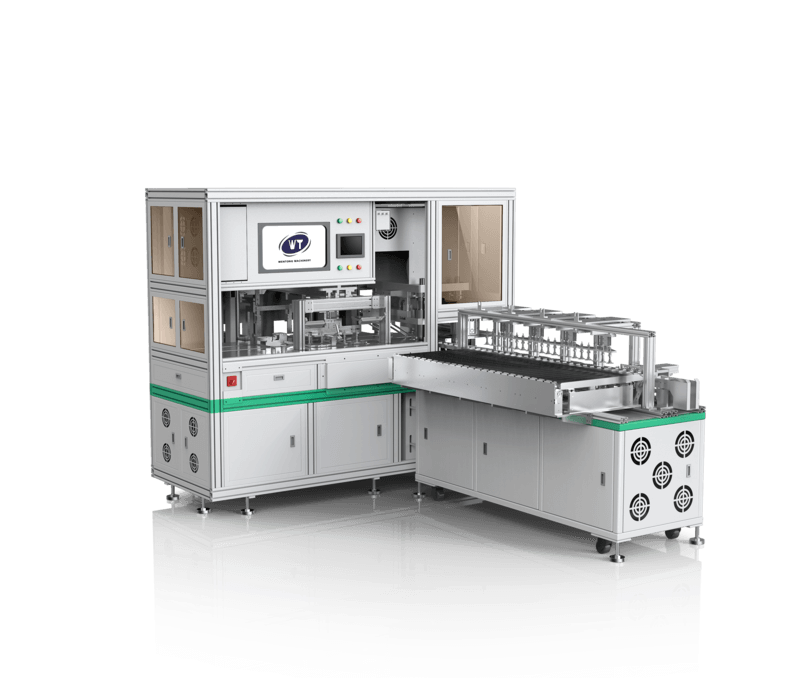
Understanding Tolerance Control in Professional Die Cutting
Steel Rule vs. Rotary Die Cutter Tolerance Capabilities
Die cutting tolerances define the allowable dimensional variation for components to ensure functional fit and assembly integrity. Steel rule dies offer cost-effective solutions for low-volume prototyping with a typical tolerance of ±0.010", while rotary die cutters achieve tighter, production-grade precision at ±0.005" through continuous rotational pressure and mechanical registration.
| Tooling Type | Tolerance Range | Ideal Application |
|---|---|---|
| Steel Rule Dies | ±0.010 inch | Low-volume prototyping |
| Rotary Die Cutters | ±0.005 inch | High-speed production runs |
Material behavior critically influences real-world accuracy—compressible foams require greater die clearance to accommodate rebound, whereas rigid composites demand sharp, stable tooling to avoid micro-fractures.
Why ±0.005" Consistency Depends on Die Design, Not Just Machine Specs
Achieving ±0.005" repeatability hinges less on machine specifications alone and more on intentional die engineering. Three interdependent factors govern consistency:
- Tooling geometry, calibrated to offset material spring-back
- Cutting edge sharpness, which minimizes deflection in dense or abrasive substrates
- Baseplate rigidity, preventing dynamic misalignment during high-frequency strikes
Material-related variability accounts for 37% of tolerance deviations in precision die cutting (Ponemon Institute, 2023). Sustaining ±0.005" performance therefore requires co-engineering the die system—tooling, substrate, and motion control—as a unified physical system.
Matching Die-Cutting Technology to Precision Requirements
Rotary Die Cutter Advantages for High-Speed, Tight-Tolerance Runs
Rotary die cutters strike a special balance between speed and accuracy, holding tight tolerances of about plus or minus 0.005 inches even when running at over 300 feet per minute. The cylinder design creates even pressure distribution with very little vibration, which is really important for getting consistent kiss cuts through tricky materials like heat sensitive films, sticky adhesives, and squishy foam products. Because they deliver this kind of dependable performance, these machines have become the go to solution for industries that need strict quality control. Medical manufacturers rely on them for parts where every fraction of an inch matters, and auto makers use them for gasket production too. When dimensions are off just a tiny bit, it can mean failed seals and trouble passing inspections down the road.
Flatbed and Digital Die Cutter Trade-offs: Accuracy vs. Flexibility
Flatbed die cutters can maintain around ±0.010 inch tolerances which works well enough for thicker composite materials. However these machines have a stop start movement pattern that actually slows down production rates and causes small alignment issues when running large batches. Digital cutting technology takes things further by doing away with all physical tools completely. This makes it possible to try out new designs quickly and switch between projects without wasting time on tool changes. But there is a tradeoff here since most digital systems only hit about ±0.015 inch accuracy because they depend on computer controlled blades instead of traditional mechanical registration systems. For jobs like making custom boxes in small quantities or working with special laminate textures, digital solutions work great. Yet when dealing with really precise tasks such as kiss cutting very thin adhesive films where depth needs to stay within 0.002 inches or less, nothing beats the consistent performance of rotary systems that have been perfected through decades of mechanical engineering advancements.
Leveraging Automation and Software for Repeatable Die Cutter Precision
CAM Software Optimization: From Vector Input to Consistent Die Strike Calibration
CAM systems today connect what designers have in mind with what actually gets produced on the shop floor by simulating how materials behave before any cutting happens. They look at things like elasticity, variations in thickness, and how cutting tools wear down over time. These simulations let machines automatically adjust for when materials stretch, compress, or expand due to heat, keeping the depth of cuts accurate within about 0.005 inches even during long production runs. The system keeps checking itself through closed loop feedback, constantly comparing what sensors detect in real time force measurements and edge detection against the original CAD designs. It then makes tiny adjustments to pressure settings, how long it stays in contact with the material, and where exactly it aligns laterally from one cycle to the next. What this all means is that parts come out consistently accurate no matter who's running the machine. Some manufacturers report cutting their waste rates by as much as 40% in regulated medical device production settings.
Material-Driven Precision: Adapting the Professional Die Cutter to Substrate Behavior
Kiss Cutting Control Across Foams, Films, and Rigid Composites
Frequently Asked Questions
What is die cutting tolerance?
Die cutting tolerance refers to the allowable dimensional variation in the cut components to ensure that assembled parts fit together correctly without compromising functionality or design.
What is the difference between steel rule dies and rotary die cutters?
Steel rule dies are ideal for low-volume prototyping with a typical tolerance of ±0.010 inch. Rotary die cutters, on the other hand, offer tighter tolerances of ±0.005 inch, making them suitable for high-speed production runs that demand high precision.
How does material behavior affect die cutting tolerance?
Material behavior, such as compression and rebound of foam or the hardness of rigid composites, influences the actual cut dimensions. Thus, proper clearance and sharp tooling are needed to account for material-specific challenges.
Can automation improve die cutting accuracy?
Yes, automation through CAM (Computer-Aided Manufacturing) systems can enhance accuracy by simulating material behavior before cutting and adjusting for variables like stretch and thickness during the production process.
Why is rotary die cutting preferred for precision tasks?
Rotary systems deliver superior accuracy and consistency, especially in tasks requiring tight tolerances like kiss cutting thin films, because of their high-speed continuous pressure and advanced mechanical design.
Table of Contents
- Understanding Tolerance Control in Professional Die Cutting
- Matching Die-Cutting Technology to Precision Requirements
- Leveraging Automation and Software for Repeatable Die Cutter Precision
- Material-Driven Precision: Adapting the Professional Die Cutter to Substrate Behavior
- Frequently Asked Questions