 EN
EN


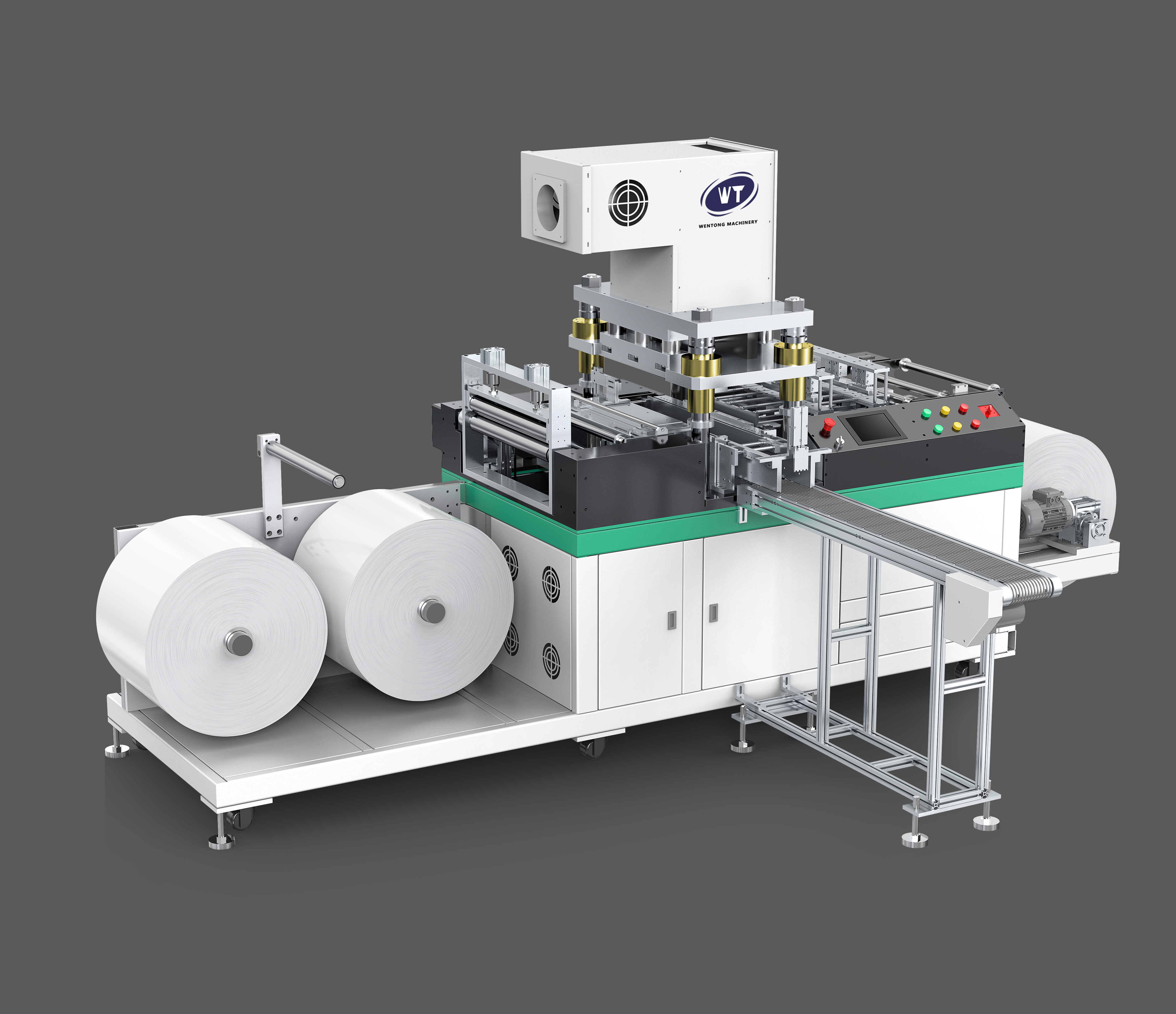
What Is Die Cutting? Definition and Meaning of Die Cutting
Die cutting refers to a manufacturing technique where a specially made steel tool cuts through various materials to create specific shapes or patterns. These dies have razor sharp edges and when pressed against materials such as cardboard, plastics, rubber sheets, even certain types of foam, they produce exact copies with neat clean lines every time. Compared to hand cutting methods, die cutting offers much better uniformity across large batches while saving lots of time during production runs. That's why so many packaging companies, automotive parts makers, and other manufacturers rely on this approach whenever they need thousands upon thousands of exactly the same component produced quickly and consistently.
How Does Die Cutting Work? A Step-by-Step Breakdown
- Die Design: Engineers create a digital template of the desired shape, which is then formed into a steel rule or solid die.
- Material Preparation: Sheets or rolls of substrate are fed into the machine and aligned beneath the die.
- Cutting Phase: Mechanical or hydraulic pressure drives the die through the material, shearing it along precise contours.
- Waste Removal: Excess material (referred to as “webbing”) is stripped away, leaving only the finished parts.
Modern systems automate these steps, achieving speeds up to 1,500 cycles per hour in high-volume environments.
The Science Behind Precision and Clean Cutting in Die Cutting Machines
Precision depends on three key factors:
- Blade sharpness: Carbide-edged blades retain accuracy over 100,000+ cycles.
- Pressure control: Advanced sensors adjust force within ±0.5 PSI to match material thickness.
- Registration systems: Optical alignment ensures positioning accuracy within 0.1 mm, crucial for multi-layer designs.
This level of technical control results in error rates below 0.2% in packaging applications, according to 2023 industrial benchmarks.
Manual vs Digital Die Cutting: Comparing Ease of Use and Output Quality
| Feature | Manual Die Cutting | Digital Die Cutting |
|---|---|---|
| Setup Time | 15–30 minutes | <5 minutes |
| Adjustments | Physical die replacement | Software-driven edits |
| Best For | Simple shapes, small batches | Complex designs, large runs |
While manual machines cost 60–70% less initially, digital systems reduce material waste by 22% (Packaging Digest, 2022) through laser-guided precision. Hybrid models now combine both approaches, offering flexibility between low-cost tooling and rapid design changes.
Types of Die Cutting Machines: Rotary, Flatbed, and Laser Compared
Rotary Die Cutting Machine: High-Speed Production for Packaging
The rotary die cutting process relies on cylindrical dies that allow for continuous operation, making it great for those big scale packaging runs. According to Packaging Insights from last year, these machines are pretty impressive, capable of running through around 150 meters of material every minute while maintaining tolerances within just 0.1 mm either way. What really stands out is how well they work with thin materials such as plastic films, metal foils, and adhesive labels. For companies needing to produce large quantities of customized packaging solutions, this capability is absolutely essential in keeping production costs down and quality consistent across batches.
Flatbed Die Cutting Machine: Versatility for Thick and Varied Materials
Flatbed cutting systems rely on hydraulic presses along with those interchangeable steel rule dies, allowing them to handle materials that are roughly three times thicker than what rotary machines can tackle. These systems really shine when working with tough stuff like thick rubber sheets measuring around 25mm, EVA foam products, and various composite layers stacked together. A recent study from 2023 looking at material flexibility showed something interesting too flatbeds actually cut down on waste by about 15-20% over traditional rotary setups when dealing with oddly shaped or large format sheets. This makes sense given how they approach the cutting process differently.
Laser Die Cutting Machine: Digital Precision and Intricate Design Capability
Laser die cutting works by replacing traditional physical dies with either CO2 or fiber lasers instead. These laser systems can produce incredibly fine cuts down to around 0.05 mm in size, making them ideal for things like micro-perforations or intricate shapes that would be difficult otherwise. Setup times get slashed dramatically too, probably somewhere close to 90% reduction when compared to conventional methods. The machines maintain pretty good accuracy below a millimeter even after doing hundreds of identical cuts one after another. There's a downside though. They do require quite a bit more power to operate than standard equipment, so running large batches becomes increasingly expensive once production goes beyond maybe 8,000 to 12,000 pieces depending on what exactly is being made.
Materials and Applications: From Paper to Plastic in Packaging and Manufacturing
What materials can be die cut? Compatibility across substrates like paper, cardstock, foam, rubber, and plastic
Modern die cutting handles over 20 material types, including paper (80–350 GSM), plastics such as PET and PVC (0.1–5 mm), and industrial materials like rubber gaskets or automotive foam. Success depends on blade hardness (30–60 HRC), cutting pressure (2–15 kN), and material tensile strength.
| Material Type | Common Applications | Cutting Considerations |
|---|---|---|
| Paper/Cardstock | Packaging, labels, invitations | Blade angle: 45°–55° |
| Adhesive Foams | Seals, insulation, cushioning | Pressure: 8–12 kN |
| Silicone Rubber | Gaskets, medical devices | Laser preferred for <1mm thickness |
| Polypropylene Film | Flexible packaging, pouches | Rotary cutter at 100+ RPM |
An industry analysis shows 93% of manufacturers now use hybrid systems to process diverse materials in single production runs.
Die cutting in packaging: Enabling complex box designs and efficiency
The $634 billion packaging industry (GlobeNewswire 2025) relies on die cutting for tamper-evident closures, foldable displays, and minimalist eco-designs. Flatbed machines achieve ±0.2 mm registration accuracy for multi-layer cosmetic boxes, while rotary systems cut over 10,000 corrugated sheets per hour with 40% less waste than laser alternatives.
Label production through die cutting: Precision and batch consistency
Pharmaceutical labels requiring ±0.1 mm tolerances are produced using hardened steel rule dies, achieving 99.98% consistency across million-unit batches. Digital registration systems correct real-time material stretch, especially critical when cutting ultra-thin polyester labels under 25μm.
Custom manufacturing applications: From automotive gaskets to craft design
Automotive suppliers produce more than 8,000 silicone gaskets daily with less than 0.05 mm variance using programmable magnetic cylinder systems. In contrast, craft operations use semi-rotary dies for small acrylic ornament batches, switching designs in under 15 minutes.
Industry case study: How a beverage company improved labeling speed by 40%
A European bottler reduced label changeover time from 45 to 27 minutes by adopting modular die cutting systems, all while maintaining ISO 22000 food-grade standards during 24/7 production of 2 million labels per day.
Benefits of Using a Die Cutting Machine: Efficiency, Repeatability, and Customization
Advantages of Die Cutting: Identical Results and High Repeatability
Die cutting delivers exceptional consistency, critical for sectors like electronics and packaging where dimensional accuracy affects performance. With tolerances within ±0.005 inches, every piece matches the original design. This repeatability reduces material waste by up to 18% versus manual methods (2023 Material Efficiency Report) and supports seamless integration into automated assembly lines.
Speed and Affordability in Mass Production Environments
Automated die cutting achieves over 1,500 units per hour in industrial settings, reducing labor costs by 30–40% compared to traditional techniques. Its scalability makes it economical for items like shipping containers or medical components, where per-unit costs drop significantly beyond 500-unit runs.
Customization and Versatility for Small-Batch and Prototyping Needs
Modern systems support both mass production and custom work, accommodating materials from 0.5 mm silicone to 10 mm corkboard. Digital platforms enhance adaptability, allowing instant design updates without changing physical dies. Manufacturers can test prototypes in under 48 hours before scaling—ideal for startups and R&D teams.
Is Digital Cutting Replacing Traditional Die Methods? Evaluating the Controversy
Even though laser and CNC machines have become more common for detailed jobs, most factories still rely on old school die cutting when they need to crank out thousands of identical parts fast. According to the latest industry stats from 2024, around two thirds of packaging plants continue using those spinning rotary dies for big orders above 10k pieces because they just plain run quicker. The new wave of hybrid machines is starting to change things though. These gadgets mix the best bits of computer controlled precision with the raw speed of traditional methods, letting manufacturers get both accuracy and volume without sacrificing too much on either side.
Choosing, Setting Up, and Maintaining Your Die Cutting Machine
Choosing the Right Die Cutting Machine: Assessing Volume, Material, and Budget
Picking out the correct cutting machine really comes down to three main factors: how much stuff needs to get made, what kind of materials are involved, and obviously money matters too. Small shops working on custom projects or making prototypes often find that manual tools or those little desktop digital cutters work just fine since they don't cost much (usually under five hundred bucks) and aren't too complicated to operate. When companies need to crank out thousands of items every hour though, most go for rotary die cutters which can handle around a thousand cuts per hour on stuff like foam boards and various plastics. There's also flatbed systems that sit somewhere between these extremes. They're good for thicker materials up to about an inch and a half thick, though expect to spend anywhere from fifteen to fifty grand depending on features. One thing worth remembering is checking if the machine can actually handle whatever materials will be used regularly. Leather and silicone require way more pressure during cutting compared to regular paper or cardboard stock, so getting something that isn't properly spec'd for those tougher jobs might lead to breakdowns sooner rather than later.
Die Cutter Machine Setup and Operation: Key Steps for Beginners
Getting the setup right stops around 73 percent of those pesky alignment problems according to Packaging Digest from last year. Start off by fixing that die board in place either with clamps or those handy magnetic plates, making sure everything lines up pretty close together across the whole work area, maybe within about 3 millimeters or so. If working with digital machines, remember to get that design file uploaded first thing and then do a quick test cut on some scrap stuff just to check if everything registers properly. A lot of folks who are new to this tend to skip over pressure calibration, which actually turns out to be the number one reason why cuts don't come out complete. When adjusting the cutting force, take it slow and steady with the pressure gauge, keeping things inside what's considered safe territory. For example, something like 200 pounds per square inch works well enough for cardboard materials whereas rubber needs closer to 450 psi. And don't forget to turn on those safety guards before kicking things into production mode.
Practical Tips for Beginners: Avoiding Common Alignment and Pressure Errors
- Misaligned dies: Use registration pins or optical sensors to reduce positioning errors by 40%
- Uneven cuts: Rotate dies every 500 cycles to distribute blade wear
- Material slippage: Apply low-tack adhesive sheets to stabilize thin substrates
- Blade dulling: Schedule resharpening after every 10,000 cuts for steel rule dies
Safety Protocols and Maintenance During Operation
Industrial die cutters account for 12% of hand injuries annually (OSHA 2024). Essential safety measures include:
- Lockout-tagout procedures during blade changes
- Infrared sensors that stop operation if hands enter the danger zone
- Heat-resistant gloves when handling laser-cut dies
Monthly maintenance should involve checking belt tension, replacing hydraulic fluid, and clearing debris from feed mechanisms. Facilities using documented maintenance logs experience 31% fewer breakdowns, according to a 2024 Material Handling Study.
Maintaining Your Dies: Cleaning, Storage, and Lifespan Extension
Steel rule dies need proper storage conditions to avoid rust problems. They should be kept in places where humidity stays below 60%, ideally somewhere temperature controlled. When working with sticky materials, it's important to clean off the residue properly. A good practice is soaking them in citrus based solvents for around 15 minutes after each cutting session. Laser dies require special attention too. Applying ceramic coatings roughly every half year helps maintain those critical micron level tolerances that these tools are known for. All this maintenance makes a big difference in how long the dies last. With regular upkeep, most manufacturers see their tooling survive anywhere between 50 thousand and 150 thousand production cycles according to various industry tests.
Future Trends: Smart Integration and AI-Assisted Die Cutting Systems
Machines connected to the internet can actually spot when blades are about to fail as much as eight hours before it happens thanks to those tiny vibration sensors they have installed. Take CutOptimize Pro for instance, this cloud based platform uses smart algorithms that tweak pressure settings automatically whenever different materials come through the production line, which saves roughly half the time needed for setups according to industry reports. Then there's these newfangled 5D dies being developed recently. They get laser engraved with QR codes so manufacturers can track how often they're used and when maintenance was last done through some kind of blockchain system. While still pretty experimental, this technology promises complete visibility across entire manufacturing processes, though many plants are still figuring out exactly how to implement it effectively on a daily basis.
FAQ
What is the main purpose of a die cutting machine?
The main purpose of a die cutting machine is to cut specific shapes or patterns into materials like paper, foam, plastic, and rubber, efficiently producing consistent and uniform pieces for various industries such as packaging and manufacturing.
How does digital die cutting compare to manual die cutting?
Digital die cutting provides greater precision, faster setup times, and is ideal for complex designs and large runs. Manual die cutting is more cost-effective upfront and best suited for simple shapes and small batches.
Which materials are compatible with die cutting?
Materials that can be die cut include paper, foam, rubber, plastic, and more. The specific compatibility depends on the hardness of the blade, cutting pressure, and the material's tensile strength.
What factors should be considered when selecting a die cutting machine?
Key factors include the volume of production needed, the types of materials to be used, and the budget available. It's important to ensure the machine can handle the regular materials involved in the process.
What are some future trends in die cutting technology?
Future trends include smart integration with internet connectivity for predictive maintenance, AI-assisted pressure settings, and the use of technologies like QR codes and blockchain for tracking die usage and maintenance.
Table of Contents
- What Is Die Cutting? Definition and Meaning of Die Cutting
- How Does Die Cutting Work? A Step-by-Step Breakdown
- The Science Behind Precision and Clean Cutting in Die Cutting Machines
- Manual vs Digital Die Cutting: Comparing Ease of Use and Output Quality
- Types of Die Cutting Machines: Rotary, Flatbed, and Laser Compared
-
Materials and Applications: From Paper to Plastic in Packaging and Manufacturing
- What materials can be die cut? Compatibility across substrates like paper, cardstock, foam, rubber, and plastic
- Die cutting in packaging: Enabling complex box designs and efficiency
- Label production through die cutting: Precision and batch consistency
- Custom manufacturing applications: From automotive gaskets to craft design
- Industry case study: How a beverage company improved labeling speed by 40%
- Benefits of Using a Die Cutting Machine: Efficiency, Repeatability, and Customization
-
Choosing, Setting Up, and Maintaining Your Die Cutting Machine
- Choosing the Right Die Cutting Machine: Assessing Volume, Material, and Budget
- Die Cutter Machine Setup and Operation: Key Steps for Beginners
- Practical Tips for Beginners: Avoiding Common Alignment and Pressure Errors
- Safety Protocols and Maintenance During Operation
- Maintaining Your Dies: Cleaning, Storage, and Lifespan Extension
- Future Trends: Smart Integration and AI-Assisted Die Cutting Systems
- FAQ