With the growth of the parent-child reading market, parents are becoming more and more picky about the quality of bookbinding and visual creativity. Die-cutting and three-dimensional modeling have become the main ways to attract the interest of young readers. The quality and speed of die-cutting are very important to enterprises because they affect the production speed and market competitiveness of enterprises. Large die-cutting machines are the most important equipment in this field. They are used to make a wide variety of products, including children's books, ordinary books, cards, smart cards, game cards, and so on. They also have three major advantages that help break through the traditional die-cutting bottleneck and make production more efficient: a precise feeding system, an automatic collection device and a real-time waste removal function. Shenzhen, China, is one of the main production areas for printing equipment manufacturing in the world. After more than 20 years of technical accumulation, the company has sold large die-cutting machines to markets such as Europe, the United States, and Southeast Asia. Its targeted optimization of performance parameters is more suitable for the diversified, small-batch, and multi-batch production needs of children's books. This article will systematically deconstruct the fundamental logic of large die-cutting machines through the analysis of the technical difficulties of die-cutting technology for children's books, the establishment of the core parameter setting logic, and the analysis of actual cases, so as to improve production efficiency and provide practical technical guidance for industry insiders.
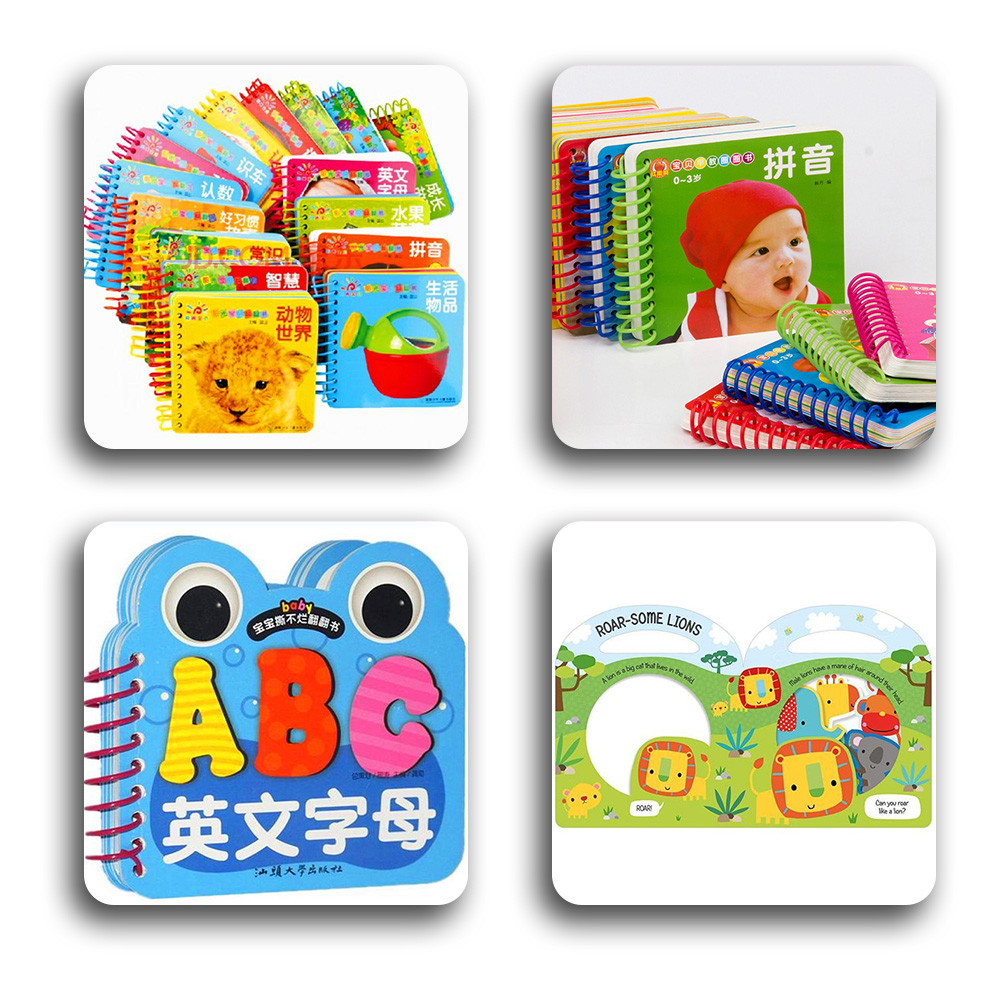
Die-cutting of children's books is different from cutting of ordinary books and periodicals with standard cutters. There are three main technical problems that directly affect production efficiency and the pass rate of finished products. These problems are caused by the audience and design requirements. First, the special-shaped structure requires a very high degree of accuracy. The special shapes of children's books, such as rounded corners, arcs, animal shapes, and scene cutouts, need to ensure that the edges are smooth and free of burrs (to avoid scratching children's hands). It is also necessary to ensure that the size error of the same batch of books is controlled within ±0.1 mm, especially the splicing part of the pop-up book, and a little deviation in accuracy will lead to assembly failure. Secondly, the material compatibility is very complex, from 80 g thin inner page coated paper to 200 g cover card paper to 350 g coated cardboard, and even the mixed use of special materials such as touch paper and fluorescent paper. This means that the die-cutting equipment needs to be able to match the tensile strength and cutting characteristics of different materials. Third, the stability of mass production is not enough. Due to the aging of the paper feeding mechanism and uneven pressure transmission, the traditional small and medium-sized die-cutting machines often cause the increase of the scrap rate. Especially in mass production with a daily output of more than 10,000 sheets, the number of shutdowns increases.
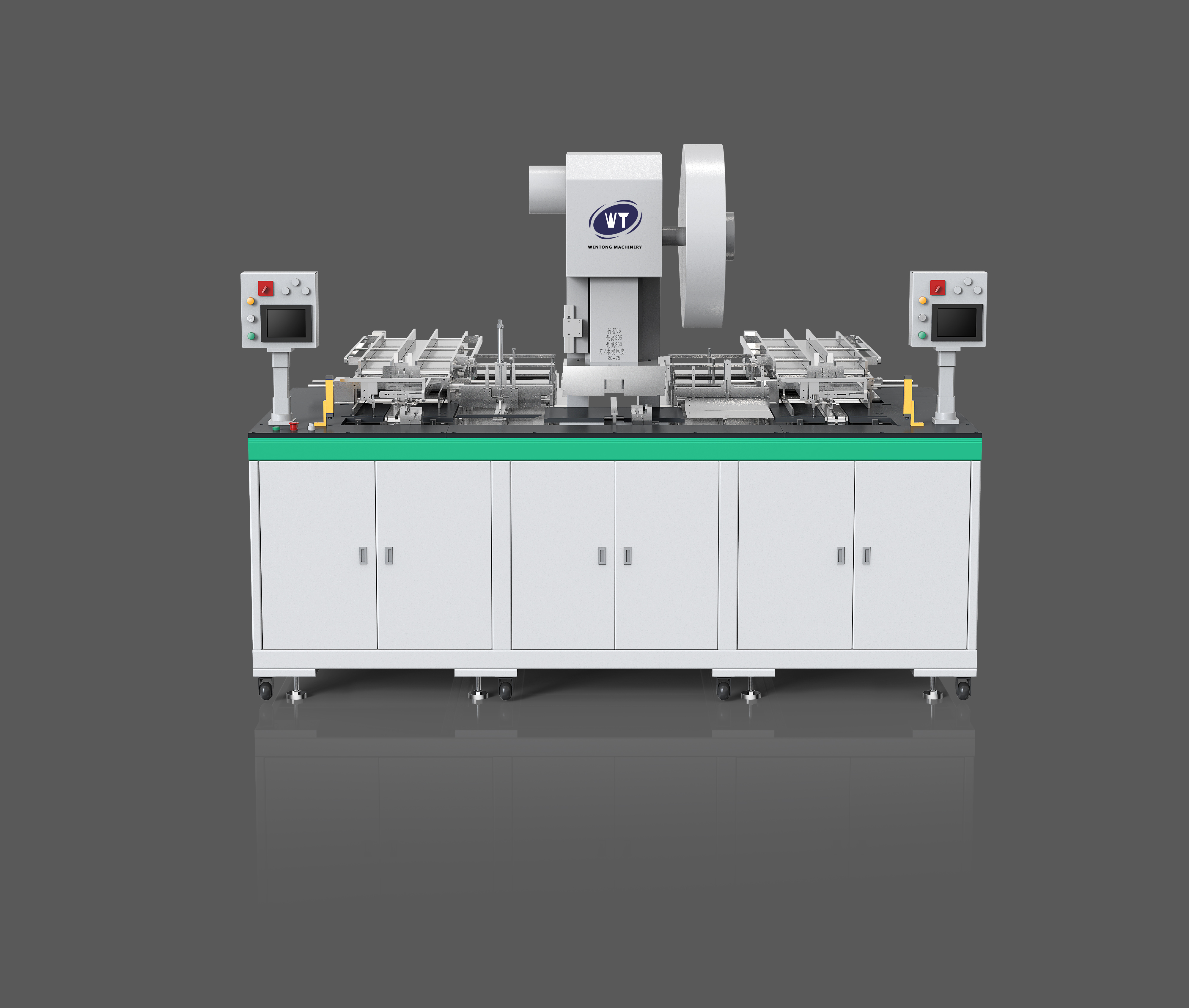
By developing new core technologies and optimizing the structure, the large-size die-cutting machine has solved the above-mentioned industry problems. The equipment adopts a 7.5 KW high-frequency automatic servo system and is equipped with an imported photoelectric positioning sensor to form closed-loop control, and the feeding accuracy is ±0.01 mm. The punching mechanism adopts a rigid frame cast at one time. This avoids the shaking of the frame when working at high speed and ensures that the edges of the special-shaped die-cutting are smooth and burr-free. At the same time, it gives the finished product a uniform cut and a unique texture, making the book look more high-end. To solve the problem of adapting to a variety of materials, its integrated customized overall solution can set parameters such as the gap between the knife molds and the punching depth through the touch system according to the physical characteristics of each material. This means that it can meet the punching needs of different fields, such as children's books and industrial filter paper. It can truly achieve multiple uses in one machine, quick parameter switching, and meet the production needs of small batches and multiple varieties. Thousands of production enterprises around the world have tested and verified the equipment, and the mature technical system enables the equipment to run continuously for 24 hours under heavy load. The body is made of solid alloy material and equipped with an automatic lubrication system. The average annual failure rate is less than 3%.
Parameter setting is the most important part to make the large die-cutting machine play the best performance. In order to avoid the loss of efficiency caused by blind debugging, a scientific logical system of "material characteristics-die-cutting shape-parameter matching" should be established. The pressure setting should be based on the idea of "step by step." The key is to ensure that the thickness and density gradient of the paper are appropriate. For example, the pressure of the conventional thin children's book inner page paper (80-120 g) should be maintained between 8 and 10 MPa. This pressure range can ensure that the incision is flat and does not damage the paper fiber; the thick cardboard cover (300-400g) needs to increase the pressure to 12-15MPa due to the high material density, and cooperate with the preheating device to soften the cardboard fiber and reduce the punching resistance; the laminating material needs to increase the pressure by 10%-15% on the basis of the basic value due to the difference in the bonding force between the surface laminating layer and the paper, and ensure the uniform pressure of the layout by locally increasing or decreasing the lining paper (such as adding 0.1mm lining paper at the laminating joint) to avoid the problem of local cutting thru or crushing the paper.
The speed setting needs to be changed according to the complexity of die cutting and the type of material. The large die-cutting machine adopts a 7.5 kW servo system, which can realize stepless speed regulation of 0-4500 sheets/hour. This means you can get the exact speed you need according to different production situations. For die-cutting regular rectangular inner pages without indentation, the high-speed mode can be set to 3,000 to 3,500 sheets per hour. The super-large format workbench (some models can reach 1300×960 mm) can process multiple layouts at one time, reducing the number of plate changes. For special-shaped shapes and fine creasing (such as the folding part of a pop-up book), the speed must be reduced to 2,000 to 2,500 sheets/hour to ensure that the creasing depth is uniform and consistent and to avoid breakage during folding. For die-cutting multi-page cards (such as game cards attached to books), the maximum efficiency can be increased to 4,000 sheets/hour, and the single-shift output can reach 32,000 sheets. It is very important to ensure that the knife pressure is at least 3 mm on the radius of the rounded corner die-cutting and the hollow area is at least 10%.
A medium-sized hardcover picture book manufacturer in Europe (with an annual production capacity of 5 million copies) has long faced three major production problems: first, the waste rate of die-cutting of special-shaped covers is as high as 8%, and the material loss alone exceeds 120,000 euros per year; second, hot stamping and die-cutting are carried out in two processes, and three additional transfer workers need to be configured, and the surface is prone to scratches in the intermediate links; third, the finished products need to be sorted manually, and each shift needs 6 workers, and the sorting efficiency is only 800 copies/hour. In early 2024, the company adopted a large-scale die-cutting machine overall solution tailored by a Shenzhen equipment company, which increased production efficiency by 40%, reduced the scrap rate to 1.5%, and reduced the labor cost per shift by 50%, and the investment return cycle was only 11 months. The main design idea behind the configuration scheme has strong reference significance for children's book enterprises.
According to the size of the customer's picture book cover (320×240 mm), the scheme selected a large-format die-cutting machine with a format of 1300×960 mm. The machine can die-cut single-sheet four-open (traditional machines can only die-cut two-open), which improves the output per unit time. The machine is equipped with tungsten steel die-cutting dies, which can be customized according to the unique shape of children's books (the knife angle adopts a circular arc transition design), and is equipped with a 7.5 kW servo feeding system. For the special-shaped lion shape of the 350g laminated album cover, the parameter combination of 14 MPa pressure and 2200 sheets/hour speed is preset, and the feeding position is calibrated in real time through the photoelectric positioning sensor to ensure that the size error of each batch of products is controlled within ±0.08 mm, and the burr-free die cutting is realized. The equipment has a high-precision hot stamping module and an independent temperature control unit, which can control the hot stamping temperature by zone. The hot stamping and die cutting processes, which were previously separated, are now combined into one, reducing the intermediate transfer time. The advanced switching technology of the equipment ensures the switching and debugging time of the two processes.
This solution fully utilizes the automation advantages of large die-cutting machines. It has an intelligent automatic classification and sorting system and a dual-mode finished product paper collection device. In response to the continuity requirements of the page numbers of the inner pages, a chain-type sequential collection mode is adopted, and photoelectric counting is adopted to ensure that the page numbers of each stack are not mixed. For different cartoon shapes on the cover, the visual recognition classification collection mode is adopted to automatically separate and store them. The sorting efficiency is increased to 2000 sheets/hour. The equipment has a built-in negative pressure waste removal system, which can suck away the edge material generated during die-cutting in real time and send it to the collection box. It also has an automatic alarm function, which reminds the user to clean up when the box is full, reducing the cleaning time after shutdown. This answer reflects the main advantage of integrated customization. The equipment company customized the placement of the equipment and the flow of materials to fit the L-shaped layout of the customer's shop. This allowed the front-end press and back-end binder to connect seamlessly. The distance materials are transported has been reduced by 60%. As of October 2024, the equipment has been running continuously for nine months, with 20 hours of heavy-duty use per day. There were only two minor faults.
In summary, the five main ways in which large die-cutting machines are optimized to be more suitable for die-cutting children's books can be summarized as follows: First, the precise parameter setting system based on material characteristics can reduce the scrap rate through the dynamic matching of pressure and speed. Second, the integrated process design combines related processes such as hot stamping to reduce intermediate circulation losses. Third, the multi-material adaptability of one machine for multiple purposes meets the needs of diversified production. Fourth, the post-processing optimization of automatic sorting and customized collection improves the automation level of the process. Fifth, the high-precision control based on the high-frequency servo system ensures the stability of mass production. The main competitive advantage of Shenzhen equipment enterprises lies not only in the advantages of product performance but also in the in-depth research on foreign markets. For example, they will study the design styles of children's books in different regions (such as Europe preferring complex hollowed-out designs and Southeast Asia preferring thick cardboard) so as to propose customized equipment configuration schemes. For customers outside the United States, the company has also established a 24-hour technical support team and is equipped with a remote fault diagnosis system to help solve after-sales problems. The two guarantees of technology and service have made Dahe die-cutting machines the main tool for global children's book manufacturers to improve productivity. It also provides them with a way to copy technology.
 EN
EN