Die-cutting machines are the main tools for making personalized products in the fields of printing and packaging, electronic manufacturing, etc. They are slowly breaking the limitations of standard equipment and providing accurate solutions for global customers. Custom die-cutting machines are becoming increasingly useful, especially when making items such as children's books, smart cards, and game cards. This article will systematically analyze the professional knowledge of customized die-cutting machines from four dimensions: definition difference, working principle, core advantages, and industry trends, and provide comprehensive technical reference for overseas market customers. Our company is based in Shenzhen, China, and our equipment is sold all over the world. Our technical knowledge and practical experience will run through the entire article to help readers fully understand this important equipment.
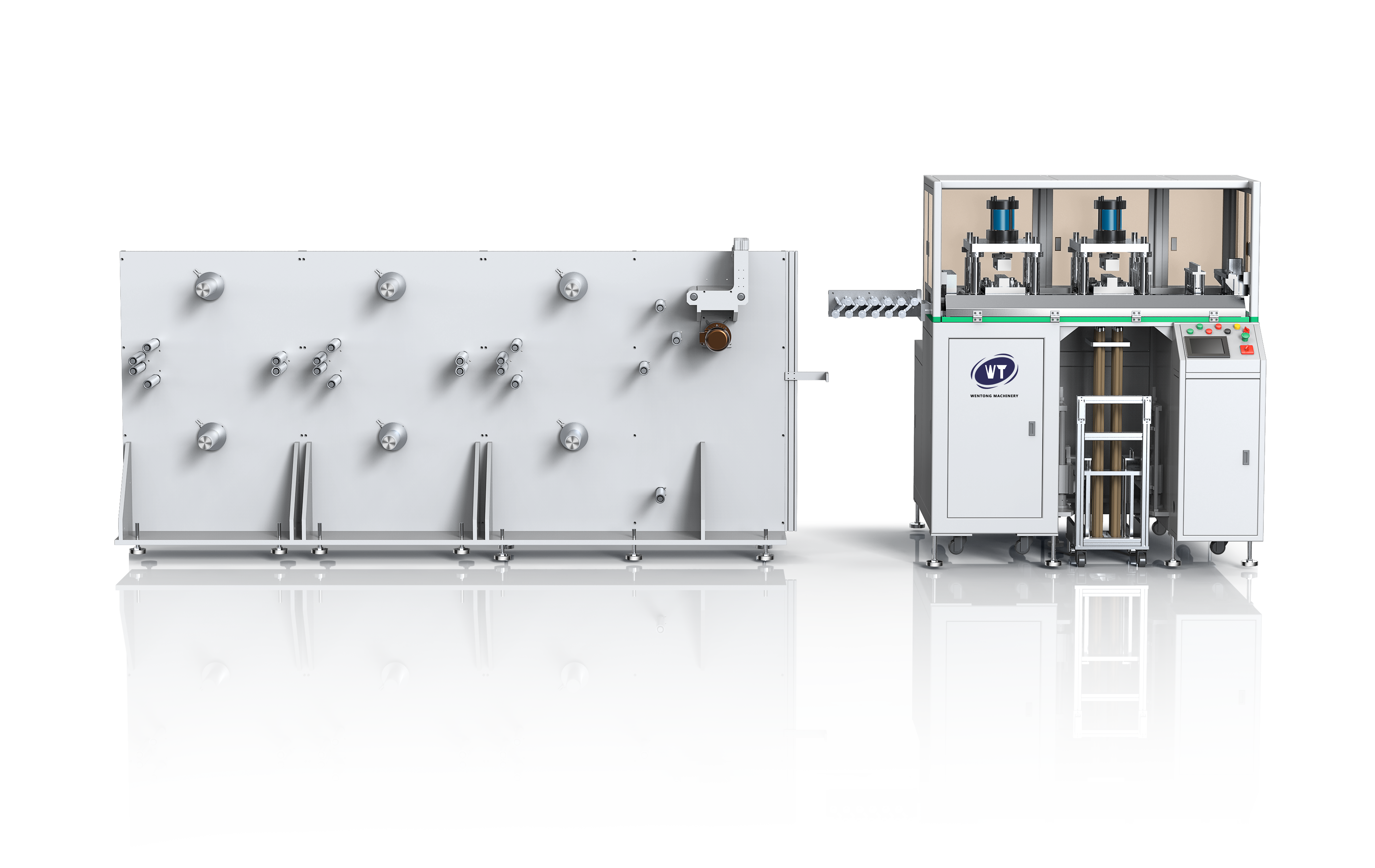
The cutting machine is a tool that uses a mold to apply pressure to the material to form it. It is often used for blanking, indentation, hot stamping, and other processes of non-metallic materials. Customized die-cutting machines are special models manufactured on the basis of standard models according to the special requirements of customers. They are manufactured according to the customer's production needs, material characteristics, and finished product requirements. Three dimensions show the main differences:
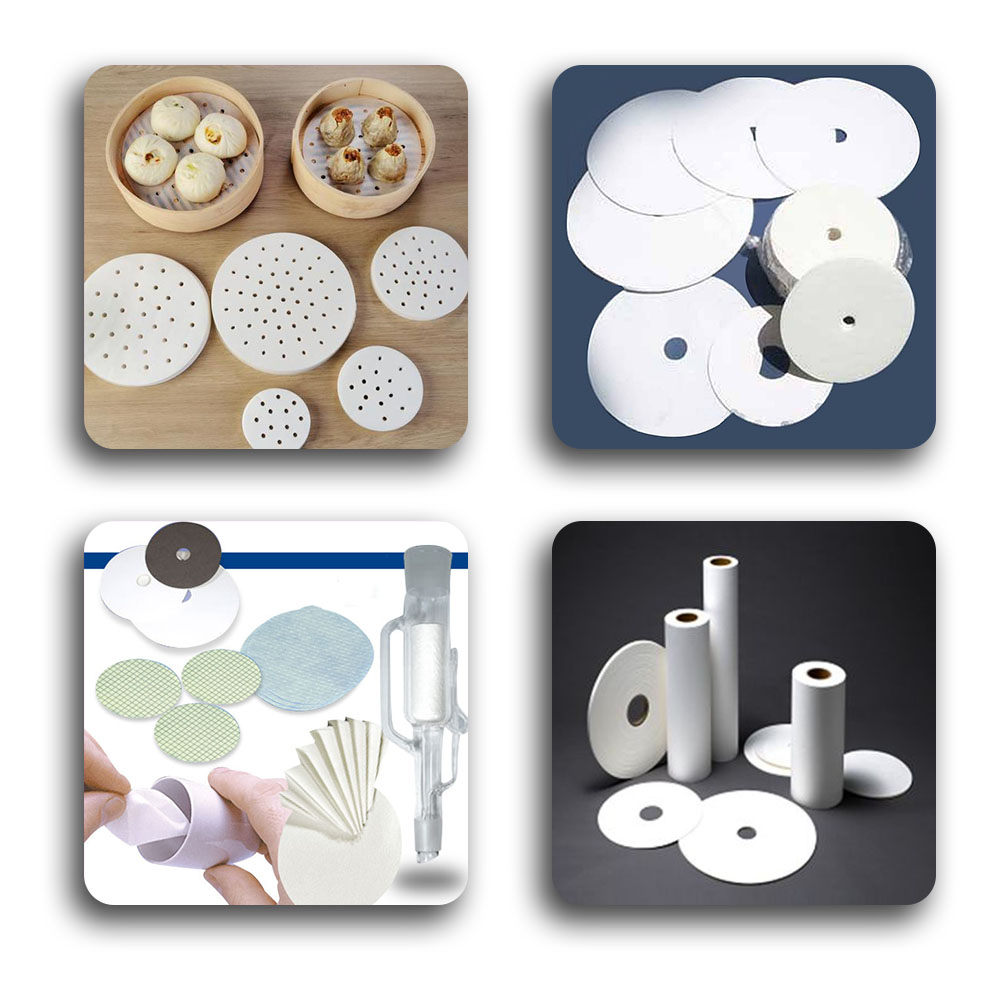
Differences in work adaptability. The mold specifications and processing parameters of standard die-cutting machines are fixed. These machines can only meet the needs of general production, and it is difficult to adapt to special processes such as the opening of window pages of special-shaped children's books and the embedding of smart card chips. Customized die-cutting machines can be applied to a variety of scenarios, such as book covers and filter paper, through mold customization, stroke adjustment, and other designs. This means that one machine can do many different things. For example, children's books need rounded corners, and customized molds can be used in conjunction with flexible pressure control. This not only ensures that there are no burrs and that the book is safe but also gives the book a unique feel.
The difference lies in the degree of system integration. Standard models mostly have only one processing module and need additional equipment to complete sorting, receiving, and other work. Customized die-cutting machines integrate processing, sorting, and collection. An automatic classification and sorting system can be set up to meet the needs of customers. It also has two collection methods: sequential or classified. This greatly improves the production process. This one-stop customized solution is a common case of Shenzhen manufacturing enterprises using new technologies to meet the needs of global customers.
After that, there are differences in the process coordination. Standard die-cutting machines can usually only perform basic stamping, while customized die-cutting machines can be more deeply combined with processes such as hot stamping and lamination. FINIDR, a Sino-European book company, has introduced a hot stamping and die-cutting machine, which adopts servo drive technology and coordinates the process at high speed. We have successfully applied this technical path to customized models, making books, cards, and other products both textured and beautiful. Surface treatment options.
The workflow of customized die-cutting machines follows the closed-loop logic of "demand analysis-scheme design-precision machining-finished product output," and each link reflects the fineness of technology:
The technical team will customize the mold structure, servo parameters, and material collection method according to the material characteristics of the customer (such as paper thickness and hardness), finished product specifications (such as smart card size accuracy), and production capacity requirements in the early stage of design. For example, when punching and cutting materials such as filter paper and books, the best angle of the mold blade is found through finite element analysis, and the differential pressure parameters are set to enable the two materials to be accurately punched and cut.
"Precision feeding—stable stamping—intelligent waste discharge" is the focus of the processing execution stage. Our customized models adopt a 7.5 kW automatic servo system, which can control tension in real time to ensure accurate feeding, and the material positioning error is controlled within ±0.01 mm. This level of precision is ideal for making precision products such as smart cards and game cards. During the stamping process, the servo system is matched with the mold. The pressure is automatically changed according to the different materials, and the high-speed rotating knife set is adopted to ensure no burrs. It is these technical details that ensure the quality of the final product.
The product processing stage reflects the intelligence of the equipment. After the equipment punches and cuts, the waste will automatically fall off. The negative pressure adsorption system is used to suck away impurities to avoid affecting the subsequent processes. The finished products enter the material collection and sorting module. According to the production needs, customers can choose to collect in order (suitable for bookbinding production line) or collect by category (suitable for multi-specification card production line). The whole process does not require manual intervention, and the production efficiency is greatly improved. From design to molding, the whole process is customized, reflecting the advanced nature of the technology.
The main competitive advantage of the die-cutting machine lies in solving the pain points in production. Combined with our technical knowledge, its advantages can be summarized into five points:
What is needed is that it guarantees accuracy and texture. The 7.5 kW servo system and high-precision guide rail cooperate to make the punching accuracy reach the millimeter level. It completely solves the problems of burr residue and size deviation existing in standard models. When making children's books, customized molds and flexible pressure control are used to make the edges of the finished products smooth and delicate. This not only meets safety standards but also gives the product a unique touch, thereby increasing the value of the product. This advantage has been proven by the long-term European and American markets.
The deep connection between usability and versatility shows that the product is worth the money. Our custom models use high-strength alloy molds and cast steel body structures. After 100,000 consecutive stamping operations, the accuracy is still stable, and the durability is far higher than the industry average. The equipment adopts a modular design, which can quickly switch molds and parameters. This means that the scene can be switched from stamping book covers to forming filter paper, which greatly reduces the equipment cost for customers. This combination of "multi-purpose" and "long-term durability" is very suitable for the needs of small- and medium-sized batch and multi-variety production customers outside the United States.
The combination of process compatibility and automation makes production more efficient. Custom die-cutting machines can be perfectly combined with hot stamping processes. This means you can hot stamp logos and patterns while punching and cutting. For example, when making game cards, the shape punching and brand hot stamping can be completed at one time, and the speed is faster. The automatic sorting and intelligent card collecting system can improve production efficiency by more than 40% and reduce labor costs by 60%. Electronic card manufacturers in Southeast Asia have already proven this efficiency improvement.
The mature service guaranty system and technology make it difficult for enterprises to compete. As a manufacturing enterprise in Shenzhen, we rely on the complete equipment manufacturing industry chain in the Pearl River Delta, and the core components can be matched by ourselves. Important technologies such as die-cutting processing and servo systems have passed the ISO9001 quality system certification. We provide full-cycle services to customers outside the United States, from early project planning to equipment installation and commissioning, and then to later operation and maintenance training. This ensures that the customized solution is implemented correctly.
With the global manufacturing industry transforming to "flexible production," the main advantages of customized die-cutting machines have become the key to the competitiveness of enterprises. Their value lies not only in the machines themselves but also in how they improve and optimize the entire production process:
Special textures and new production methods are what set printing and packaging companies apart from each other. The customized die-cutting machine combines hot stamping technology with precise pressure control. This makes children's books, high-end cards, and other products feel delicate and look three-dimensional, helping customers stand out in the market. A European children's picture book publisher saw its market share of special-shaped flip books increase by 25% after using our customized die-cutting. This case shows that improving the texture has a great impact on the improvement of commercial value.
For electronic product manufacturers, precision and stability are the most important factors in determining the product qualification rate. When making smart cards and game cards, the punching accuracy of the chip embedding position is very high. Our customized models adopt a 7.5 kW servo system and real-time detection technology, and the qualified rate of finished products is maintained above 99.8%, which is far higher than the industry average. At the same time, the equipment has a long design life and an average annual failure rate of less than 3%. This is perfect for overseas customers who need to maintain large-scale production.
The versatile, automated design has greatly reduced costs. One machine can do many different things, so customers don't have to set up separate equipment for each product. The equipment utilization rate is increased by more than 60%. The automatic sorting and intelligent material collection system reduces labor, and the energy-saving design of the 7.5 kW servo system (15% more energy-saving than the old model) helps customers achieve the best life cycle cost. The reason why customized die-cutting machines are becoming more and more popular around the world is that they can reduce costs and improve quality at the same time.
With the popularization of the concept of Industry 4.0, customized die-cutting machines are changing in the direction of "more precise, more intelligent, and more integrated." The future trend is mainly reflected in three aspects, combined with industry data and technical practice:
The goal is to develop from automation to intelligence. At present, the 7.5 kW servo system has realized the basic automatic control. In the future, artificial intelligence algorithms and machine vision technology will be used to add intelligent functions such as predicting tool wear and automatically detecting defects. According to industry best practices, intelligent models used in conjunction with multiple sensors can extend the mean time between failures by more than 43%. We have included this technology upgrade in our R&D plan and plan to apply it first in the production of electronic cards.
The ability of digital integration is becoming stronger and stronger. The customized die-cutting machine will be seamlessly connected with the customer's MES and ERP systems to realize automatic scheduling of production orders, one-key calling of process parameters, and digital traceability from order to finished product. This data-driven production model can help remote customers remotely control global factories and keep up with the trend of intelligent manufacturing. Shenzhen is a major hub for intelligent manufacturing equipment in China, and its complete industrial chain provides strong support for this digital upgrade.
Color energy saving is closely related to customization. With the increasingly strict global environmental protection policies, customized die-cutting machines will reduce energy consumption by optimizing the servo system and recovering waste heat. At the same time, special solutions will be created for new materials such as degradable materials and recycled paper. For example, in response to the punching and cutting needs of filter paper for food packaging, customized models with low dust and easy cleaning will be created to meet green production standards.
The technical progress of die-cutting machines is always based on customer needs. Its main value lies in the fact that it enables customers to produce personalized products, whether by improving accuracy, integrating intelligent systems, or providing complete solutions. As a technology supplier from Shenzhen serving global customers, we have always focused on durability, precision, and multi-application in our designs. We also help customers in other countries improve their competitiveness by providing mature technical solutions. In the future, with the deeper integration of digital and automation technologies with die-cutting machines, customized die-cutting machines will create value in more fields and become an important part of flexible production.
 EN
EN