 EN
EN


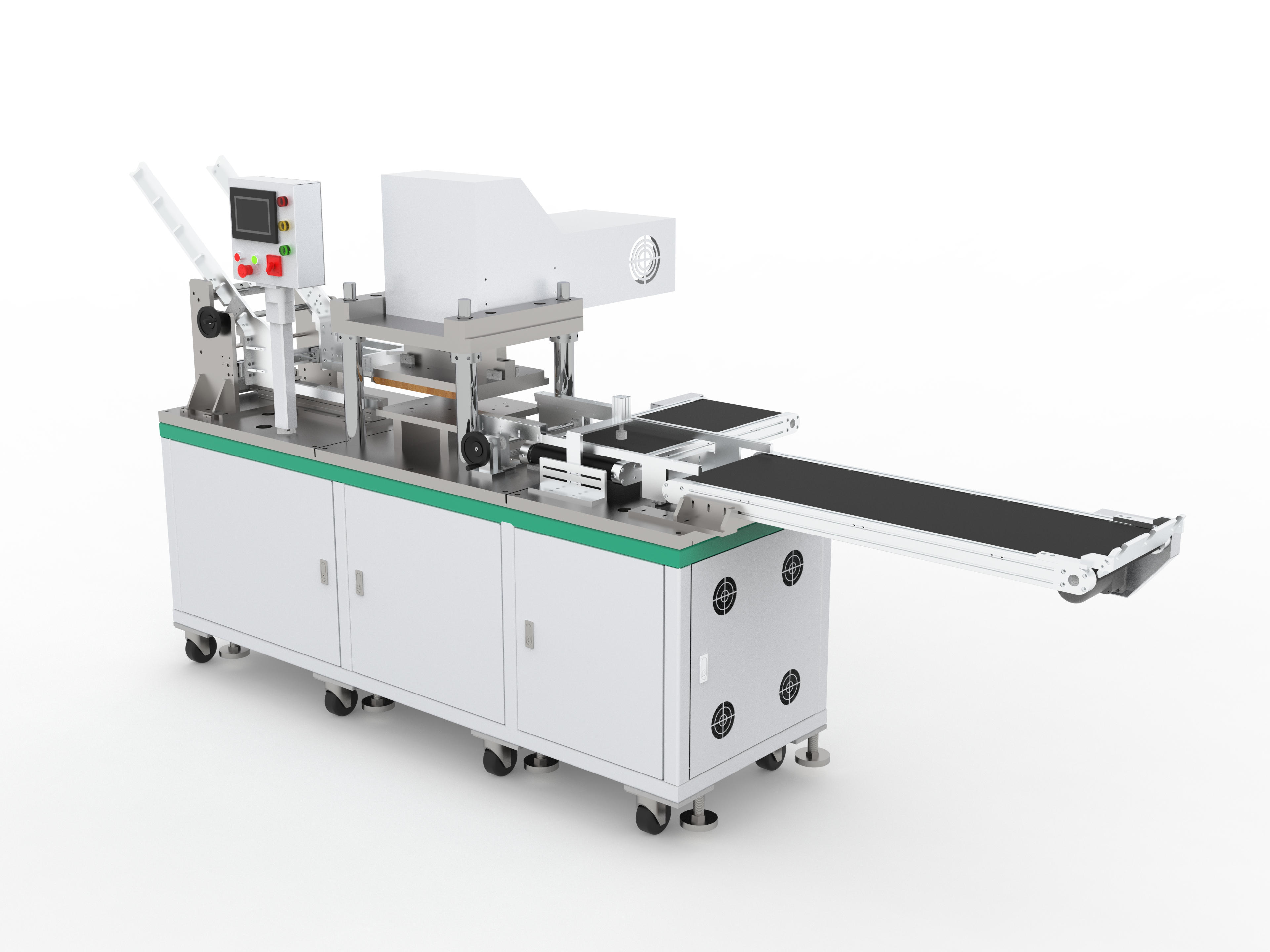
Enhance Precision Without Sacrificing Speed in Die Cutting Machine Operations
Addressing Inconsistent Cutting Precision During High-Speed Runs
Modern die cutting machines maintain ±0.05 mm accuracy at speeds exceeding 12,000 cycles/hour through dynamic registration systems. Real-time laser monitoring adjusts for material thickness variations, while servo-controlled web tensioners reduce positional drift by 78% compared to mechanical counterparts (International Card Manufacturers Association 2023).
Achieving Accuracy With Alignment Sensors in Narrow-Web Die Cutting
High-resolution vision sensors (up to 1,200 dpi) deliver <5 μm registration accuracy in narrow-web applications. Operating at 120 error-correction cycles per second, these systems compensate for substrate expansion and contraction during high-speed runs. Advanced models include material recognition databases that automatically adjust blade pressure for 38 common cardstock types.
Resolving the Trade-Off Between Faster Speeds and Dimensional Accuracy
Hybrid cutting systems now switch between speed-optimized (10,000+ sheets/hour) and precision-focused (7,500 sheets/hour) modes mid-run without stopping. Predictive algorithms analyze cut complexity and shift modes when tolerances are at risk.
| Parameter | Traditional Systems | Modern Adaptive Systems | Improvement |
|---|---|---|---|
| Max Speed | 8,000 sph | 12,500 sph | +56% |
| Dimensional Error | ±0.3 mm | ±0.08 mm | -73% |
| Defect Rate | 1.2% | 0.15% | 87.5% |
This performance is enabled by real-time strain gauge feedback loops that adjust cutting force within 0.5 ms of contact, allowing 40% faster operation while meeting ISO 10755 Class 2 precision standards.
Streamline Workflow with Kiss Cutting and Efficient Web Scrap Removal
Balancing speed and waste management is critical in die cutting operations. The following strategies help maintain workflow efficiency while reducing material costs.
How Optimized Web Scrap Removal Reduces Downstream Bottlenecks
During high-speed runs, narrow-web die cutters generate 14–18 lbs/min of scrap. Poor scrap handling leads to:
- Conveyor jams (accounting for 23% of unplanned downtime, per the 2023 Materials Handling Report)
- Increased compressed air use from forced ejection
- Accelerated wear on servo-driven gripper systems
Implementations using process optimization platforms show automated matrix stripping significantly mitigates these issues. A 2024 case study found a 32% increase in uninterrupted run time after upgrading to self-adjusting scrap winders.
Implementing Kiss Cutting to Minimize Waste and Accelerate Assembly
Kiss cutting preserves carrier sheets while defining product outlines with partial-depth cuts. Benefits include:
- 40% reduction in relamination steps versus through-cutting
- 47% lower adhesive contamination risk (Coatings Journal 2023)
- Support for continuous inline finishing
Servo-controlled depth adjustments (±0.0004") enable up to 25% higher speeds without sacrificing cut quality on 0.020" PVC substrates.
Data Insight: 15–20% Reduction in Post-Processing Time With Smart Matrix Stripping
Analysis of 142 production lines revealed smart stripping systems with real-time tension monitoring achieve:
| Metric | Before Implementation | After Implementation |
|---|---|---|
| Scrap removal consistency | 78% | 94% |
| Manual intervention rate | 12x/shift | 3x/shift |
| Trim waste percentage | 4.1% | 2.8% |
These gains translate into 18% faster job changeovers and 22% lower material costs in card manufacturing workflows (2024 Process Efficiency Study).
Leverage Preventive Maintenance and Operator Training to Sustain High Speeds
The Role of Maintenance and Training in Maximizing Die Cutting Machine Efficiency
Sustained high-speed performance depends on both machine reliability and operator expertise. Proactive maintenance reduces unplanned downtime by 18–25% in narrow-web environments, while trained operators resolve issues 30% faster than untrained teams. This synergy ensures consistent throughput and protects tooling integrity over extended runs.
Daily Diagnostic Checklists to Prevent Unplanned Downtime
Key inspections help preserve operational speed:
| Component | Inspection Focus | Speed Impact If Neglected |
|---|---|---|
| Ejection System | Scrap removal consistency | 15–22% slowdown from jams |
| Hydraulic Pressure | Linearity across RPM ranges | Irregular dwell times (±12%) |
| Registration Sensors | Web alignment calibration | Material waste doubling hourly |
IIoT-enabled dashboards automate logging and convert manual checks into predictive maintenance workflows.
Reactive vs. Predictive Maintenance: Which Boosts Long-Term Speed More?
Reactive maintenance deals with problems as they happen, but predictive techniques actually make machines last around 40% longer and cut down on wear from speed variations by about 19%. Take vibration checks on cutting cylinders for instance these help stop bearings from breaking down, something that usually causes a drop in rotational stability of between 0.8 and 1.2 percent each week. Plants that mix thermal imaging for checking motor health with proper training programs see way fewer emergency shutdowns during important production periods. We're talking about a staggering 93% reduction compared to facilities still stuck in the old ways of just fixing things when they break.
FAQ Section
What is die cutting, and why is precision important?
Die cutting is a manufacturing process used to cut, shape, and form materials. Precision is crucial in die cutting to ensure that the parts fit well together, meet design specifications, and function as intended without errors.
How does modern die cutting technology maintain precision at high speeds?
Modern die cutting machines use dynamic registration systems with real-time laser monitoring and servo-controlled web tensioners to maintain precision. This technology allows the machines to adjust for material thickness variations and reduce positional drift, ensuring accuracy even at high speeds.
What is kiss cutting, and how does it help minimize waste?
Kiss cutting is a technique that makes partial-depth cuts on materials, allowing the carrier sheet to remain intact. This reduces relamination steps and adhesive contamination risks, enabling faster and more efficient processes.
Why is preventive maintenance crucial for die cutting machines?
Preventive maintenance is crucial because it helps reduce unplanned downtime and extends the machine's lifespan. Regular inspections and maintenance ensure that the machines operate efficiently, preventing costly breakdowns.