The die-cutting machine is the most important equipment in the card-making process. Its performance and stability directly affect the final quality of the product. From the membership cards and supermarket loyalty cards we use every day to smart cards that can interact with information (such as transportation cards and campus cards) to card games and collectible cards with complex processes, every qualified card needs to be perfectly cut and formed by a die-cutting machine. Shenzhen is the center of the global precision manufacturing industry. With a complete industrial chain and technological R&D advantages, Shenzhen has given birth to several die-cutting machine companies with global competitiveness. The equipment produced and sold by these companies is widely used in various card production lines. And it has been successfully applied to other fields such as bookbinding and punching, filter paper forming, and packaging color box cutting. The equipment is sold to major markets around the world, including Europe, the United States, Southeast Asia, and the Middle East. With a complete technical system, it can be customized according to the needs of various markets. This article will systematically explore the fundamental factors affecting the quality of cards produced by die-cutting machines from both technical and practical aspects and provide professional technical guidance for card production practitioners around the world in combination with industry standards and basic equipment characteristics.
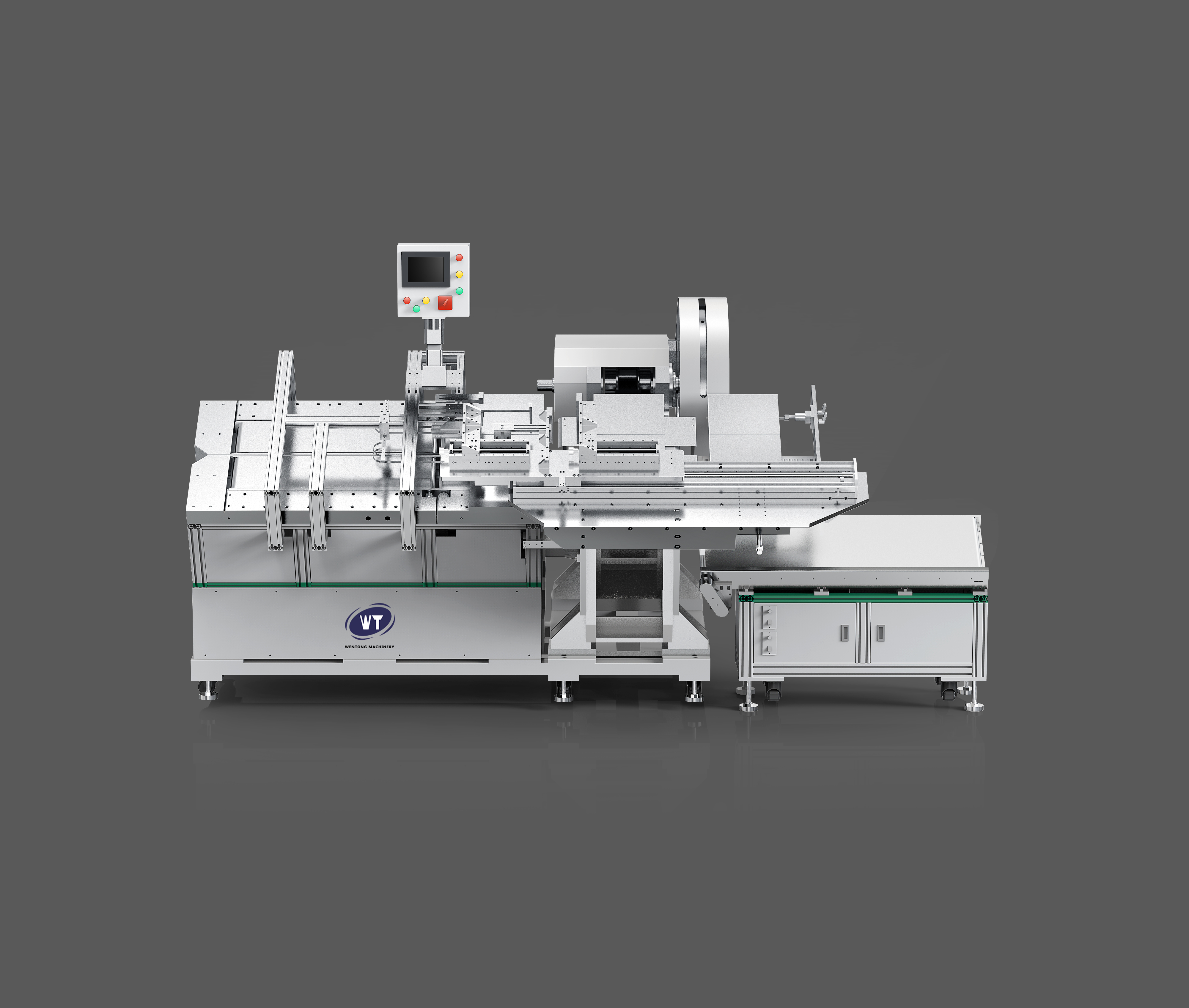
Cutting burrs are the most common quality problems in card production, which reduces the product qualification rate. The main reasons are the three aspects of equipment precision control, process parameter matching, and adaptation to material characteristics. When the mechanical positioning error of the feeding mechanism exceeds 0.2 mm, the cutting position of the material will change, and the blade will not be able to touch the material. If the gap between the die and the bottom die is not set according to the thickness of the material (for example, PVC cards require a gap of 0.03 mm, and ABS materials require a gap of 0.05 mm), the cutting force will be uneven, forming serrated or flocculent burrs. In terms of technology, if the pressure is set incorrectly (too high will crush the edge of the material, too low will not cut it off at once) or the running speed does not match the material toughness (such as PET material cards needing to run below 30 m/min), the blade cannot be cut off instantly, and tear-like burrs will be formed. The cutting effect is also directly affected by the different properties of the material itself. For example, soft PVC materials produce sticky burrs due to the blunting of the cutter, and hard ABS materials produce burst burrs due to stress release. These defects not only change the appearance of the card,
To get rid of the burr, better technology, better equipment, and a quality control system for the whole process are needed. The domestic industry standard CY/T 59—2024 "Process Control Requirements for Flat-bed Die-cutting of Paper Printed Products" stipulates that the positioning tolerance of die-cutting equipment should be no more than 0.15 mm. This means that the feeding system must be able to control the movement of the equipment very precisely. Most of the die-cutting machines produced in Shenzhen adopt a 7.5 kW automatic servo system. The system adopts closed-loop linkage control between the photoelectric sensor and servo motor, corrects the feeding error in real time, and finally controls the positioning accuracy within 0.1 mm, which eliminates the burrs caused by feeding offset from the source. The equipment also comes with a multi-stage pressure adjustment module, which can set the pressure parameters of different materials through the touch screen (such as a PVC card set to 8-10 MPa and a paper card set to 5-7 MPa). The settings can also be fine-tuned in real time based on feedback data during the production process to ensure that the blade is evenly stressed throughout the cutting process. The standardized process of "first trial cutting, then testing, and then mass production" is promoted: when the first piece is produced, the edge quality is tested through a high-definition microscope to determine the best running speed, pressure, mold gap, and other parameters; in the mass production process, the automatic waste discharge system of the equipment combines negative pressure adsorption and mechanical separation to remove cutting waste in time so as to avoid the accumulation of waste affecting the subsequent cutting. Finally, the burr defect rate can be stably controlled below 0.1%, fully realizing the high-quality requirements of precise punching and cutting without burrs.
The smoothness of the card edge directly affects the touch experience and service life of the product. The design and matching accuracy of the die-cutting knife are the most important factors affecting this core indicator. The technical basis for the edge processing quality is the blade angle, precision tolerance, and installation calibration process of the die-cutting blade. The typesetting height of the die-cutting knife line must be strictly controlled within 0.02 mm, and the thickness cannot exceed 0.02 mm. If it exceeds this range, the contact area between the blade and the material will be different during die cutting. The pressure on the thicker areas is too high, resulting in edge collapse. The pressure is too small in the thin areas, so there are no burrs and the edges are not smooth. For example, when making smart cards, if the edges are not smooth enough, the card will get stuck in the card reader. Over time, the contacts on the card reader may wear out. In addition, the assembly method of the die-cutting knife is also very important. In order to ensure that the error does not exceed 0.01 mm, it is necessary to use a dial indicator to check the parallelism between the die-cutting knife and the die-cutting machine knife holder. If they are not parallel, the uneven defects of one side deep and one side shallow will appear.
The high-quality die-cutting machine adopts an integrated customized overall solution, which makes the mold and equipment perfectly fit and cooperate perfectly. Customized mold design services can be provided according to the edge quality requirements of different types of cards. For example, for thin PVC smart cards (0.76 mm thick), a 45° acute angle blade design is used to ensure that the cut surface is flat and smooth. For thick game cards (1.2 mm thick) or cards with embossed patterns, a 30° obtuse angle blade is used to make the cutting process more stable and prevent the pattern area from chipping. The equipment comes with a fully automatic mold calibration system, which uses laser ranging and mechanical probe dual mode to detect the parallelism and perpendicularity of the mold in real time. The accuracy is automatically calibrated every 1,000 runs to ensure that the error of the same position of the repeated unit product does not exceed 0.1 mm. It is worth noting that the die-cutting machine manufactured in Shenzhen has the function of linkage of the hot stamping process and can carry out two processes of "die-cutting" and "hot stamping" at the same time. While the precision cutting is being performed, the servo system synchronously controls the pressure and temperature of the hot stamping head, and the patterns with metallic textures, such as gold and silver, are hot stamped on the edge or surface of the card.
The flatness of the card is a key functional indicator to measure its quality. The flatness of smart cards, magnetic stripe cards, and NFC cards directly affects their card reading performance and service life. The international standard ISO/IEC 7810, Identification cards—Physical characteristics, specifies that the warpage of the most common ID-1 type card (standard credit card size) should be strictly limited to within 0.5 mm. If the card is warped beyond this range, the card reader will not be able to read the card smoothly, or the card will not be able to be read due to poor contact with the card reader contacts. The main reason for card warping is improper pressure control. There are two main ways in which it works: one is that the pressure distribution is uneven during the die-cutting process, that is, the extrusion pressure of different parts of the material is different, and permanent stress is generated inside. After cooling and shaping, the stress release leads to warpage deformation; the second is that the pressure is too large, resulting in the compression of the edge of the card, which not only affects the dimensional accuracy but also destroys the molecular structure inside the material, resulting in local warpage. A smart card manufacturer in Southeast Asia once had a batch of cards with a 5% warping defect rate due to uncontrolled punching pressure. This resulted in a direct loss of over 100,000.
The advanced die-cutting machine can accurately change the pressure because it adopts the servo pressure control system. The equipment adopts a 7.5 KW high-performance servo motor, and through the PLC control system, it can change the pressure output in real time according to the shape of the mold (round, square, or special-shaped) and the thickness of the material (the most common range is 0.5-2.0 mm). According to the shape of the mold (round, square, or irregular) and the thickness of the material (the most common range is 0.5–2.0 mm). It also controls pressure fluctuations within ±0.5 MPa to ensure that pressure is evenly distributed on the surface of the material. The durable design of the equipment also ensures long-term flatness control: the body is made of high-strength cast iron combined with aviation-grade aluminum alloy. This not only ensures the stability of the equipment but also reduces the impact of mechanical vibration on the pressure output. The precision guiding mechanism adopts an imported ball screw and has the function of automatic reminder of regular lubrication. In this way, the equipment can still maintain stable pressure output even if it works at high intensity for 24 hours a day, 365 days a year, and the annual start-up time is more than 3,000 hours. The pressure deviation is kept within 0.3 MPa to prevent pressure changes caused by equipment wear.
To produce high-quality cards, strict international and domestic industry standards must be followed. Die-cutting is an important process that determines the shape and precision of the product. Its quality control measures must meet the final acceptance standards. In China, CY/T 59—2024, "Process Control Requirements for Flat-bed Die-cutting of Paper Printed Products," is mainly applicable to similar products such as playing cards and business cards. It is clearly stipulated that the cutting edge of the die-cut product should be smooth, without burrs, with no ink loss on the edge, and with no indentation. The size tolerance is controlled by the length of the line segment. For example, the tolerance of a 60 mm long line segment is ±0.15 mm, the tolerance of a 60-100 mm long line segment is ±0.25 mm, and the tolerance of a line segment longer than 100 mm is ±0.50 mm. ISO/IEC 7810 Identification cards - Physical characteristics are a worldwide standard for the manufacture of smart cards and magnetic stripe cards. It requires that the card have a certain size (85.60×53.98 mm), thickness (0.76mm±0.08mm) and warpage (≤0.5 mm). It also requires that the radius of the rounded corners of the edges be kept within the range of 3.18 mm ± 0.38 mm. During the actual acceptance inspection, professional tools are required to measure the size (using a digital caliper with an accuracy of 0.01 mm), flatness (using a flatness detector), and edge smoothness (using a 50x high-definition microscope). Ensuring that all indicators meet the standard requirements is also the main basis for inspecting the performance of the die-cutting equipment.
The core performance of the die-cutting machine is to ensure that the product meets industry standards. After more than 20 years of technological development, Shenzhen-made die-cutting machines have surpassed the standard in many important indicators. For example, the punching accuracy is stably controlled within ±0.1 mm, which is 33% higher than the requirements of the CY/T 59-2024 standard. The warpage control capability is within 0.3 mm, which is better than the requirements of the ISO/IEC 7810 standard. The multi-purpose design of the equipment makes it more adaptable to different markets. By changing the mold and adjusting the settings, it can punch filter paper as thin as 0.1 mm (such as coffee filter paper and laboratory filter paper), and it can also punch 3 mm thick book covers and can accurately cut various cards. This means that one machine can do many things, greatly improving the utilization rate of equipment and the return on investment for manufacturing enterprises. During the acceptance process, the equipment's built-in online detection system builds a real-time quality control network. The high-definition industrial camera takes photos of each finished card, and the artificial intelligence algorithm automatically finds defects such as edge burrs, dimensional deviations, and flatness exceeding the standard, with an accuracy rate of up to 99.9%. The automatic sorting function moves unqualified products to a special material bin in real time and sorts or collects qualified products according to the preset plan to ensure that the products sent to customers meet the acceptance standards. The integrated customized solution of the die-cutting machine can quickly replace the mold specifications, pressure parameters, and inspection standards and meet the quality needs of different markets around the world. For example, some European countries require the card thickness to be 0.8 mm ± 0.05 mm. Thanks to the modular design, the equipment can be transformed within 48 hours.

In short, the die-cutting machine has a full-process guaranty system for card quality through four systems: precise feeding control, optimized mold adaptation, stable pressure output, and intelligent finished product processing. Die-cutting machines made in Shenzhen still have the main advantages of mature technology, durability, and a high degree of customization. With new functions such as the 7.5 kW servo system, AI online detection, and hot stamping process linkage, the production quality and efficiency have been improved to a higher level, and the product has strong competitiveness in the global market. From the perspective of the industry development trend, card products are becoming lighter and thinner and have more and more functions, while die-cutting machines are becoming more and more precise (positioning error is less than 0.05 mm), faster (production efficiency is increased by 50%), and more intelligent (no one participates in the whole process). This also means that manufacturing companies need to be more cautious in the selection of equipment. When selecting die-cutting equipment, card manufacturers should consider their own product types (such as smart cards that need to focus on flatness control and game cards that need to focus on edge smoothness and texture), production scale (such as large-scale mass production that needs to focus on equipment durability and continuous operation capabilities and small-batch customization that needs to focus on equipment flexibility and model change efficiency), and the standard requirements of the target market. Customizable and upgradable equipment should be selected.
 EN
EN