When making game cards (such as collectible cards, magic cards, etc.), there are three main points that need to be done at the same time: fast card production speed, accurate patterns, and smooth edges. The die-cutting machine is important equipment for making cards. It is often used for the molding of products such as cards, smart cards, and game cards. The technical characteristics of the product directly affect the smoothness of the production process and the qualification rate of the finished product. Shenzhen is a major production center for intelligent manufacturing equipment in the world. Its self-developed die-cutting machine is favored by the global overseas market due to its advanced technology and wide applicability. It provides overseas card manufacturers with all-round support from equipment to overall solutions.
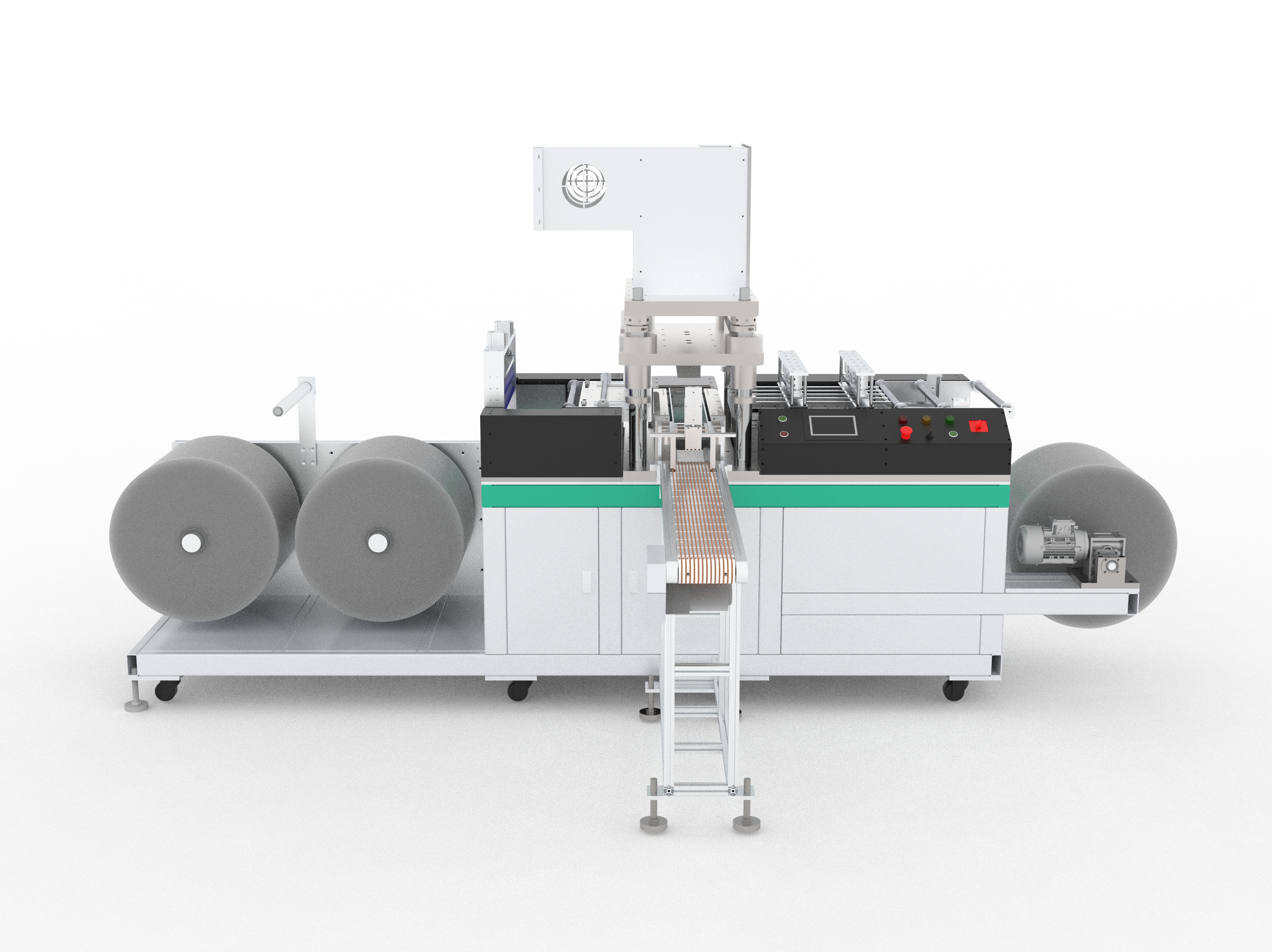
The main job of the die-cutting machine is not just "punching and forming." It also has basic functions such as accurate feeding, automatic receiving, and automatic waste discharge. In addition, advanced technologies such as multi-station design, servo drive, and customized sorting have solved the problems of "low efficiency, large deviation, and high waste" in the game card production industry. This article will interpret the die-cutting machine from the three perspectives of technical principle, application advantages, and practical cases, and see how it has become the main tool for making game cards quickly and conveniently.
The game card industry needs mass production most. For example, the order volume of popular IP cards can reach millions of pieces, and the traditional single-station equipment is difficult to meet the delivery cycle requirements. Multi-station die-cutting machines have been improved in production efficiency and applicability through structural optimization and technology integration. The main points are as follows:
The multi-station die-cutting machine adopts the "parallel operation" mode; that is, the processes of feeding, punching, waste removal, finished product collection, etc. are all completed on a continuous production line, and no manual intervention is required between the links. For example, when making standard game cards (63 mm × 88 mm), a single-station device can only punch 80-120 cards per minute. The multi-station die-cutting machine made in Shenzhen can die-cut 300-500 sheets per minute, and there is no risk of downtime during continuous operation. This is because the equipment has a 7.5 kW servo drive system. The precise control of the servo motor ensures the coordinated work of each station, avoids the lag and deviation in the mechanical transmission, and can maintain stable operation efficiency even in long-term mass production.
Game card manufacturers often face the problem of "a single product line leading to idle equipment." The multi-application design of the die-cutting machine perfectly solves this problem. The equipment can not only produce core game cards, smart cards, and conventional card punching. By changing the mold and adjusting the settings, it can also be used for cross-scene tasks such as book cutting and filter paper punching. This feature of "one machine for multiple uses" not only reduces the cost of purchasing equipment for enterprises but also makes better use of production capacity. For example, a foreign-funded card production enterprise, in the off-season, undertakes filter paper punching orders through die-cutting machines. This increased the equipment utilization rate from 60% to 95%, greatly improving the return on assets.
The biggest problem with manual operation in mass production is that it is uncontrollable, inefficient, and inconsistent. The die-cutting machine made in Shenzhen can achieve unmanned operation in three important links of the whole process of automatic design:
The servo-driven feeding mechanism is adopted to ensure that the position of the card base sheet is always consistent before punching. The positioning accuracy is ±0.01 mm.
Automatic waste discharge: The machine body is equipped with a negative pressure adsorption waste conveying channel, and the waste generated by punching and cutting is cleaned in real time, without accumulation, and does not affect the next process.
Customized finished product collection: Supports two main receiving methods: (1) Receiving materials in order (suitable for orders that need to maintain production batches); (2) Receiving materials by category (suitable for orders with mixed production of different styles). The paper collection efficiency is 100%, and there is no paper jam, wrinkle, or paper disorder.
100% paper collection efficiency, no paper jam, wrinkle, or paper disorder.
The "texture" and "consistency" of game cards directly affect the consumer's feelings. For high-end playing cards, there are very strict requirements for the alignment of patterns, the smoothness of edges, etc. The die-cutting machine achieves precise execution of quality control through three major technologies:
After the card is printed, the deviation between the pattern and the punching contour must be controlled within 0.1 mm. Otherwise, problems such as "pattern offset" and "white edge exposure" will occur. The die-cutting machine made in Shenzhen adopts the double insurance technology of "visual positioning + servo correction":
The built-in high-definition visual inspection system can capture the reference points of the printed pattern in real time and compare them with the preset punching contour.
If a deviation is detected, the servo system quickly changes the feed position. The correction response time is less than 0.05 seconds, ensuring that the pattern alignment accuracy of each card reaches the standard.
This technological breakthrough has completely solved the problem of "manual calibration" of traditional die-cutting machines. Even in long-term production, the pattern alignment error can be stabilized at ±0.05 mm, which is far better than the industry standard.
The basic quality requirement for playing cards is that the edges are smooth. Burrs not only change the feel of the card but also cause the cards to stick together and wear out. The edge quality control of the die-cutting machine is mainly based on two designs:
The mold process uses imported tungsten steel cutters, and the cutting edges are ground into very precise shapes. To avoid burrs on the substrate, the punching pressure is evenly distributed along the edge of the card.
Punching setting adjustment: According to the different types of card substrate (such as coated paper, PVC, PET, etc.), the punching speed and pressure settings can be adjusted. For example, PVC cards use the "low speed and high pressure" mode, while coated paper cards use the "high speed and low pressure" mode. This ensures that the edges of the punched and cut cards with different substrates are smooth and flat.
Third-party testing shows that the edge roughness of the cards cut by the die-cutting machine made in Shenzhen is Ra≤0.8μm, without burrs or rough edges. The hand feel is also soft, which meets the texture standard of high-end cards. Third-party testing shows that the edge roughness of the cards cut by the die-cutting machine produced in Shenzhen is Ra≤0.8μm, without burrs and rough edges. The delicate feel is exactly what high-end cards need.
High-end game cards often need to be combined with hot stamping, hot silver, and other processes to make the texture better. The die-cutting machine's "hot stamping + punching" design combines the processes:
The equipment can be combined with a hot stamping station, and the hot stamping and die cutting process does not need secondary handling, avoiding pattern offset. The servo system accurately controls the hot stamping pressure and temperature and synchronizes with the punching action to ensure the accurate alignment of the hot stamping pattern and the punching outline. At the same time, it ensures that the hot stamping layer does not fall off or overflow.
This integrated design not only makes production more efficient but also improves the "texture" and "consistency" of the card, which is why high-end card manufacturers choose it.
Mass production requires equipment to be very "durable," and frequent maintenance will directly affect the delivery cycle. The die-cutting machines made in Shenzhen are more durable, mainly due to three designs:
The body is welded with thickened steel plate, which is very strong and can withstand the vibration of long-term high-load stamping.
The core components (servo motor, cutter, and bearing) are all famous international brands, and the service life is more than 8000 hours.
The built-in intelligent maintenance reminder system monitors the running status of the equipment in real time and sends out an alarm when the wearing parts need to be replaced.
Foreign customers said that the average fault-free time of the same type of die-cutting machine is 5,000 hours, and the maintenance cost is only 60% of similar products.
The following is a real case of a magic card manufacturer abroad. Let's take a look at the main steps of their efficient production using die-cutting machines and provide the industry with a replicable model:
Customer requirements: Produce 500,000 high-end magic cards. Requirements: 1. The production cycle of mass goods must be less than 72 hours; 2. The pattern alignment error must be less than 0.1 mm; 3. The edge must not have burrs; 4. The process must support hot stamping; 5. The goods must be received according to the style (3 styles are mixed).
Shenzhen equipment suppliers provide a complete solution of "hot stamping + multi-station punching and cutting + automatic sorting" according to customer needs:
It has a four-station die-cutting machine with a hot stamping station, a punching station, a waste removal station, and a sorting and collecting station.
For this purpose, three sets of punching dies (one set for each card) were specially made. The servo parameters and acquisition system were adjusted to meet the needs of classification acquisition.
Based on the card substrate (350 g copperplate paper + gold stamping layer), the punching pressure is set to 12 MPa, and the speed is 400 sheets/min;
The visual positioning system corrects the pattern reference points of the three styles, and the alignment error is set to ±0.05 mm;
By testing the classification and collection function, ensure that the three types of cards enter the corresponding collection boxes correctly without confusion. Check the card collection function to ensure that the three types of cards enter their respective card collection boxes without any mixed cards.Check the card receiving function to ensure that the three types of cards enter their respective card receiving boxes and that there is no card mixing.
The automatic feeding system feeds the substrate into the machine. First, the hot stamping of the pattern is completed through the hot stamping station; then the stamping station is formed.
The negative pressure system clears the edge material produced during punching in real time to avoid accumulation;
The sorting and collecting system sorts the finished cards that have passed the visual inspection according to the style. The collection speed is 400 cards per minute.
The equipment checks the running status in real time during the production process, and the parameter deviation is automatically corrected without manual intervention.
Efficiency: 520,000 cards were produced in 72 hours, exceeding the order quantity, and the production speed reached 450 cards per minute.
Quality: We randomly selected 1,000 cards for inspection. The pattern overprinting error is less than 0.05 mm, the edge is smooth, and the hot stamping layer is free from falling off.
Consistency: The three types of cards are of the same size, with a deviation of no more than 0.1 mm. The order of the cards is not random and meets the needs of customers.
The success of this case is basically a test of the "technical maturity" and "customization ability" of the die-cutting machine. The integrated customized solution meets the demand of "multi-process integration"; the multi-station and servo drive ensure "fast," the visual positioning and tool technology ensure "good," and the classification collection and durability design ensure "saving." This also shows that the main value of the die-cutting machine is not only in the "equipment itself," but also in its fit with the production needs and its support for the entire process.
The "efficiency" and "consistency" of game card production are basically a comprehensive reflection of equipment technology, process integration capabilities, and customization capabilities. The reason why Shenzhen-made die-cutting machines have become the best choice for card makers in the global overseas market is that they have ten core features. Including unique texture presentation, super durability, multi-application design, hot stamping process, mature and stable technology, integrated customized solutions, automatic classification and sorting, 7.5 KW servo drive, customized finished product collection, accurate punching without burrs, etc.
From a technical point of view, the die-cutting machine solves the efficiency problem through multi-station linkage and automatic integration. The quality problem is solved through visual positioning and precise tool control. By adapting to multiple scenarios and providing customized solutions, application problems can be solved. From a practical point of view, it can help enterprises reduce costs, shorten production cycles, and make products more competitive by continuously producing high-quality products.
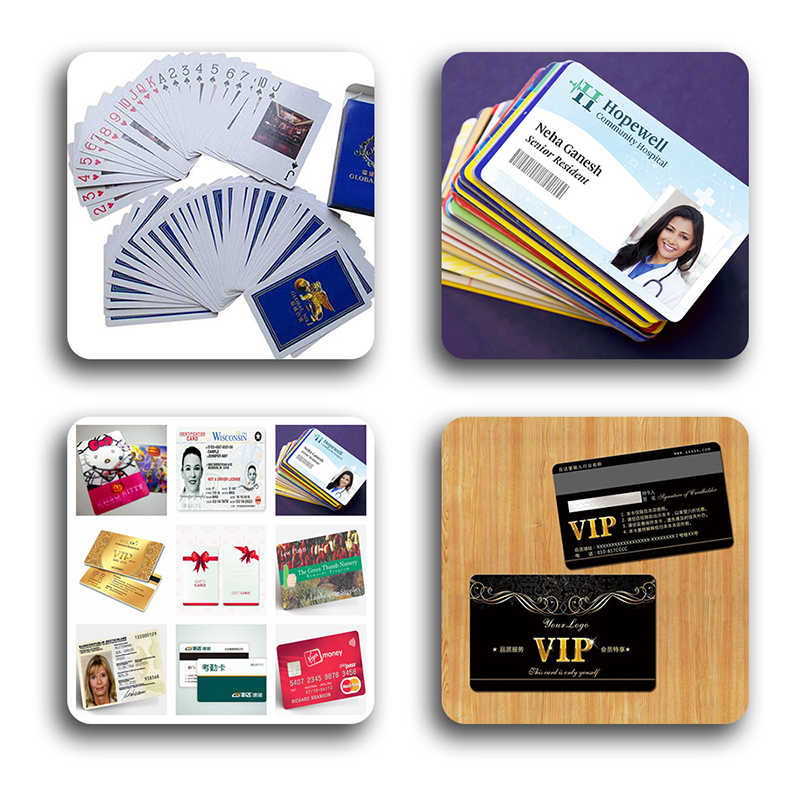
For companies that make game cards, the most important thing is to choose a die-cutting machine that is both mature and very flexible. This helps them produce large quantities of cards and do very high-end upgrades. Shenzhen will continue to be driven by technological innovation to create die-cutting machines and overall solutions that are more competitive in the global overseas market. This is because Shenzhen is the main base for equipment research and development and production.
 EN
EN