As a popular offline entertainment method, board game cards have seen a steady increase in demand and more diversified product specifications in today's globalized game industry. When producing standard-sized collectible cards, battle cards, and special-shaped character cards, terrain cards, and other products, manufacturers often face small-batch, multi-batch orders. A major problem in the industry is how to quickly and easily switch between the production of cards of different sizes and shapes while ensuring product quality and correctness. This article will introduce in detail how the PVC card die-cutting machine, especially its quick mold change system, uses modular design and automation technology to provide flexible, accurate, and efficient solutions for the production of card products such as board game cards.
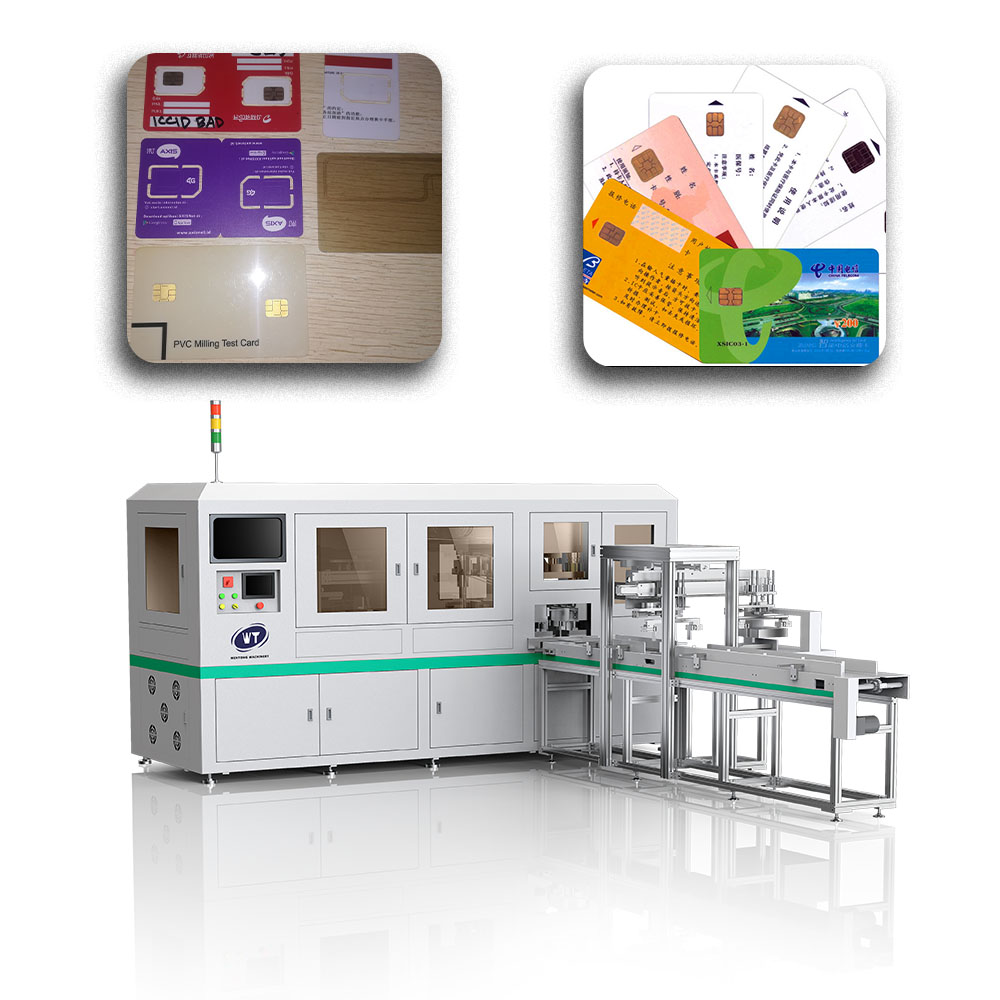
The production of board game cards usually requires a mix of materials. These materials include PVC, paper, flexible magnetic sheets, and various composite materials. These cards come in a variety of sizes, such as standard playing card size (63 mm x 88 mm), trading card size (approximately 66 mm x 91 mm), and other non-standard custom sizes. They may also have unique designs, such as rounded corners and die-cut shapes. On traditional high-volume die-cutters, frequent die changes to accommodate different order specifications mean a lot of downtime. Not only do you have to take out the old die and put in the new one, but you also have to realign, pressure test, and test cut the new die. This can take anywhere from half an hour to several hours. In addition, traditional die-cutting methods often require pinholes or connection points to be left in the layout design to keep the material in place and ensure its correct registration. The edges of the finished product will leave traces, which will affect the beauty, and the post-processing will take more time and money.
Small and medium-sized printing companies or manufacturers that take on a large number of different orders find it difficult to react to the market because they cannot easily change their minds and the switching costs are high. In the board game industry, where crowdfunding projects, limited sales, and seasonal sales are common, the ability to quickly proof and complete small-batch production has become a major competitive advantage. In other words, the industry needs a tool that can make things happen quickly. This means it should be easy to set up, easy to use, and quick to switch between orders. Modern PVC card die-cutters, especially those with quick die change systems and step-feed technology, need to address this key issue.
Modern PVC card die-cutting machines use a very modular die design, which solves the problem of frequent die changes. The main idea behind this design is to make the die system easier to use by breaking it down into smaller, lighter components. One of the most important parts is the die base plate, which is made of wood or other lightweight composite material. Wooden lightweight dies are much lighter than traditional steel integral dies. This makes moving, installing, and removing them safer and faster. In actual production, it takes only 2-3 minutes to replace a set of lightweight dies, saving a lot of labor.
Modular design is reflected in the way molds and equipment are installed and secured. Most quick mold change systems are equipped with hydraulic locking devices or precision mechanical locating pins. These devices ensure that the new mold is in the correct position when it is installed on the machine and keep the basic alignment error within a small range. This lays a solid foundation for you to make changes and calibrations later.
More importantly, this PVC card die-cutting machine has a better "layout visual correction positioning" system. The system uses a high-resolution CCD camera to capture the edge of the material or the pre-printed mark point in real time. The intelligent software then views the image and compares it to the graphic set for die-cutting. Once the system detects that the material has shifted during movement, it tells the feeding mechanism to make dynamic fine adjustments. This is to ensure that each card is in the correct position before die-cutting. This feature is very important for doing long-run roll material. It makes up for the cumulative error of the material itself stretching or conveying and guarantees the finished product's overprint accuracy and edge quality from the source.
The equipment, together with the "step-by-step precision feeding" technology, can cut the long roll material into several step-by-step sections for accurate transmission. The encoder feedback helps the servo motor drive the high-precision feeding roller, which can very accurately control the feeding amount of each step. This means that even for complex cards that require multiple stampings to complete the typesetting, the machine can check whether the feeding of each step is correct. This means that "die-cut products do not need to be nailed together." The edges of the formed cards have no burrs and do not need to be cleaned again. This directly makes the product's yield and high-end texture better.
The integrated solution, based on modular die-cutting, includes intelligent visual correction and stepping precision feeding, which can reduce the downtime caused by changing specifications by more than 60%. This makes the equipment work better when making a large number of small batches of products.
To make the theory useful, you need to know how fast the whole process of switching from one card specification to another is. The best quick mold change system for PVC card die cutting machines can shorten the whole switching time, including mold replacement, parameter setting, and calibration test, to less than 5 minutes. Some optimized processes can be completed even faster.
This rapid shift was possible because the workflow was highly organized and computerized:
Pre-staging and quick die change: The operator pre-stages the lightweight wooden die before the next order arrives. When the current order is complete, the equipment switches to mold change mode. With the aid of extra equipment built into the machine or simple tools, the operator can safely release the fixings on the old die, move it out of the way, and push the new die into place. The modular positioning system ensures that the mold is in the correct position from the start, and the process usually takes less than two minutes.
One-key retrieval of digital parameters: The new PVC card die-cutting machine is equipped with an intelligent human-machine interface (HMI). You can save all order settings, such as feeding step, die-cutting pressure, visual punctuation coordinates, and collection methods, as recipes. The operator only needs to touch the screen and select the order number or product name to change the order. All preset settings can be called up with one click. You don't have to manually calculate or set up, because the system will do most of the work for you.
Automatic calibration and trial cutting verification: After loading the parameters, the machine uses its "layout visual correction and positioning" system to automatically find the marking points on the material and complete the first alignment. After that, you can cut a small piece of material to see the effect. Usually, because the initial positioning is very accurate, only one or two fine-tunings are needed to achieve the perfect die-cutting effect. The precision servo punching power system is usually equipped with a servo motor with a power of at least 7.5 KW, which makes the punching force stable and easy to control. This ensures clean, burr-free cut edges on a wide range of materials, including thin paper and thick PVC film (typically 0.15 mm to 1.0 mm thick).
You can choose the finished product collection method and connect with the back end; you can also quickly change the collection method when switching orders. There are usually two ways for the PVC card die-cutting machine to automatically collect cards: (1) In order, keep the order in which the cards come out of the mold, which is convenient for subsequent counting and packaging; (2) by category, that is, different pattern cards or waste materials cut out from the same layout are sent to different card receiving slots through program control. This makes the common shuffling method used for board game cards very easy. More advanced systems can also be directly connected to the automatic packaging line at the back end, with tools such as counting, stacking, and plastic sealing. This achieves a complete solution from die-cutting to packaging, reducing labor and time loss in the intermediate links.
A skilled operator can switch from one card specification to another in five minutes by following the steps above. Then they can immediately start producing stable cards. This makes the equipment ideal for rapid proofing for customers, as well as taking on "small batch orders" of hundreds to tens of thousands of cards. Printing companies can quickly meet the production needs of various products in the Indian and global markets, such as board game cards, smart cards, business cards, animation cards, star cards, etc. They can also complete it with less money and faster shipping times.

In the card manufacturing industry, especially when making board game cards with complex specifications, the quality and speed of enterprise production directly affect its market competitiveness. Traditional die-cutting machines have difficulty keeping up with the rapidly developing small-batch customized market because it takes a long time to replace the mold, calibrate the mold, and rely on physical connection points.
The new PVC card die-cutting machine with a quick mold change system can change the entire set of specifications in less than 5 minutes, and the work efficiency is more than 80% higher than that of the old machine. Modular lightweight mold design (mold change time is shortened to 2-3 minutes), intelligent visual correction and positioning system, stepping precision feeding technology, digital parameter management, etc. make all this possible. Its characteristics of "short" (short preparation time), "smooth" (smooth and accurate operation), and "fast" (fast switching and fast production speed) are exactly what the current market needs.
The equipment has the following obvious technical advantages: The die-cut products do not need to be nailed, and the finished products are more beautiful and of higher quality. The powerful layout correction and precise feeding ability ensure that the finished product position is very accurate, the card edge quality is good, and there is no burr. The flexible finished product collection method and back-end connection capability support the automation of the production process. It can work with a variety of materials, including paper, PVC, film, soft magnetic sheets, etc. This means that it can not only cut small boxes and other things but also make many different cards.
Card manufacturers in India and elsewhere with large and diverse printing and gaming industries can more easily win more orders and shorten response times if they invest in highly flexible PVC card die-cutting machines. This gives them an edge in a highly competitive market. It is not only a tool for making things but also a key technology that enterprises need to carry out flexible manufacturing and provide better customer service.
 EN
EN