One of the main reasons why card die-cutting technology is so important in the card-making industry is that it can accurately process materials. The game card die-cutting machine is important equipment for card making. Its performance directly affects the accuracy, quality, and production speed of the final product. With the change of market demand, the card-making materials have rapidly changed from paper to various plastics, metal sheets, and new composite materials. The increase of this material boundary makes the die-cutting process more difficult and promotes the continuous innovation of equipment technology. This paper will deeply explore the parameter modification and program complexity required by today's game card die-cutting machine when processing PET transparent cards, metal cards, anti-counterfeiting materials, and various special coatings, and predict the technical requirements brought by the emerging material trend.

Key parameter adjustment and special treatment of the die-cutting die when die-cutting different materials
Common choices for improving the grade and function of cards include PET (polyethylene terephthalate) transparent cards, metal foil cards (such as aluminum foil cards), and composite holographic anti-counterfeiting film cards. However, their physical properties are very different from ordinary cardboard, so the die-cutting process needs to be adjusted.
1.PET transparent card: The material is tough and elastic, but the cut is prone to burrs and tensile deformation. When using the game card die-cutting machine, the most important thing is to remember to pay close attention to the tension and punching force.
-
Change key parameters: The feeding speed needs to be consistent so that the material will not be stretched when it suddenly stops and starts. The machine's unique "step-by-step precision feeding" system greatly reduces the cumulative error and internal stress of the material during the feeding process. The ability to precisely vary the stamping pressure is very important. If the stamping pressure is too high, it may make the material brittle or cause the mold to wear out too quickly. If it is too low, the burrs cannot be completely cut off. The 7.5 kW servo punching power system can provide stable instantaneous burst punching force to ensure that the incision is clean and neat.
-
Special maintenance of die-cutting tools: The sharpness of die-cutting tools is very important. When cutting PET, you usually need high hardness, mirror-polished blades. You may also need to change the angle slightly to make cutting easier. In addition, the "no nail hole, no connection point die-cut products" process has obvious advantages for these materials. It avoids the separation or appearance problems that may occur at the connection points in the traditional process and makes the edges of the transparent card look good.
2.Metal foil cards: A very thin layer of aluminum foil or other metal is usually glued to the card base. The problem is that the metal is very ductile and the blades wear out quickly.
-
Key parameter changes: To ensure that the metal layer is completely cut, the punching force needs to be increased immediately. This can avoid the cutting of metal wires or burrs. In this case, the stability of the servo power system is very important. The waste removal system also needs to run well so that metal debris will not hinder subsequent processing or damage the equipment.
-
Special care for die-cutting knives: Die-cutting knives need to be made of very hard materials, such as tungsten steel, and may need to be coated in a special way (such as with titanium) to make them more wear-resistant. The angle of the blade needs to be designed to ensure thoroughness and durability of the cut.
3.Anti-counterfeiting holographic film material: The surface of this material has a micro-structured optical coating that is very sensitive to pressure and friction. It is easily scratched or cracked.
- Adjusting key parameters: The control of die-cutting pressure needs to be very precise. The machine needs to be able to make pressure adjustments at the micron level in order to find a balance point that can completely cut off the substrate without damaging the surface holographic layer. The high-precision pressure control system of the game card die-cutting machine is very important here. In addition, for holographic materials that require pattern positioning, the "layout visual correction positioning" function is very important. It can automatically find the marking line or pattern feature on the material, ensure that the die-cutting position of each knife is accurate, and save materials.
- Special care for die-cutting knives: The blade needs to be very sharp, and "cutting" is used instead of "pressing" to reduce the pressure on the surface of the material. Single-sided blades or die-cutting knives with special angles can be used to make the cutting force act more on the thickness direction of the material, rather than laterally squeezing the surface layer.
Die-cutting process for coating cracking
Special coating processes such as touch film (adding a suede or leather texture), embossed UV (adding a local raised texture), and reverse UV (adding a local matte and bright contrast) can make the card look and feel more upscale. However, these coatings are prone to edge cracking, warping, and falling off during die-cutting, which is a difficulty in the die-cutting process.
1.The root of the challenge: The problem is that the coating does not adhere well to the substrate, and the coating may be brittle. The vibration and lateral shear forces generated by traditional impact die cutting can easily pull the coating and substrate apart at the cut.
2.Craft secret:
-
Temperature control: Some high-end game card die-cutting machines can have a built-in temperature control module. Moderately heating the regional materials (not high temperature) can reduce the brittleness of some coatings (such as UV coatings) and increase the plasticity, making it easier to cut and less prone to cracking.
-
The "short, flat, and fast" punching rhythm: The "short, flat, and fast" characteristics of the equipment played a role here. The fast punching stroke shortens the time of contact and friction between the mold and the side of the material, thereby reducing the possibility of the coating being "pried up." The machine tool structure is very strong, which makes the stamping process stable and prevents vibration from causing more damage.
-
Extremely high die accuracy and maintenance: The die must be perfectly vertical and parallel. Even a slight tilt can cause the coating to tear at the cut. Regular and accurate maintenance and replacement of the die is the most important thing to ensure the quality of the coating die-cutting. The "wooden lightweight die" design makes it easy to complete the die change in just 2-3 minutes. This makes users more willing to check and replace the mold status frequently to maintain the best cutting state.
-
Optimized pressure profile: Advanced servo drives allow you to program the pressure profile of the stamping process, allowing you to use the "fast forward-slow cut-fast back" mode. This mode is very gentle when the blade contacts and leaves the coating.
-
Downstream cooperation: The "orderly collection of finished products" or "classified collection of finished products" function of the game card die-cutting machine can gently separate the die-cut finished products and place them in an orderly manner. This can prevent the fragile coating edge from colliding in the next manual sorting.
New demand forecast for die-cutting technology of paper-based composite cards and plastic cards
The environmental protection trend has a great impact on the card business. In the future, degradable plastic cards (such as PLA material) and high-end paper-based composite cards (such as stone paper and synthetic paper composite materials) will be important growth areas. This makes die-cutting technology look forward to the future.
1.Biodegradable plastic cards, such as PLA:
-
Material properties: PLA and other bio-based plastics may not be as hard or brittle as regular PET and are more sensitive to temperature (lower glass transition temperature).
-
New demands are forecast: Die-cutting processes may require more controllable temperature environments to prevent materials from softening and deforming due to frictional heat or excessive temperature. To reduce cutting heat and adhesion, die-cutting tools need to be sharper and smoother. Equipment needs to be able to better handle changes in processing parameters to cope with the fact that different formulations of biodegradable materials may not always work in the same way.
2.High-grade cards made of paper and other materials:
-
Material properties: This material may consist of several layers of paper with different properties or be laminated with a film. The bond strength between the layers is very important. They may have tougher fibers or special surface treatments.
-
New demand forecasts: Die-cutting machines need to be able to control pressure well so that they can cleanly cut tough fiber layers without delamination. For composite structures, the angle and pressure of the die may need to be changed to achieve "synchronous cutting" and prevent the layers from moving due to different forces. As environmentally friendly materials are often more expensive and have higher requirements for the yield rate of finished products, the characteristics of the equipment, such as "high precision of finished product position and good edge quality," will be more important.
3.New general rules for the use of technology in devices:
-
Better detection and feedback: In the future, equipment may need more advanced online detection systems that can check the quality of cuts and coatings in real time and automatically adjust settings.
-
Intelligentization and datafication: Collect successful die-cutting parameters of different new materials, establish a process database, and realize "one-key material change" production. This will make the demand for "quick changeover" (target time 15 minutes) applicable to more complex material fields.
-
Overall solution capability: The demand for online production will increase from die-cutting to post-press packaging. The ability of the game card die-cutting machine to "connect with the overall solution of post-press product packaging" will help card companies quickly and with low loss complete the entire process of making and packaging environmentally friendly material cards.
Conclusion
Each new card material, from traditional cardboard to PET, metal, holographic materials, different special coatings, and more environmentally friendly new materials, is constantly challenging the technical limits of game card die-cutting machines. Successful die-cutting is no longer just the action of "cutting," but a systematic project combining material science knowledge, precision mechanical control, and process experience.
The main equipment needs to have a very precise and highly adaptable feeding and correcting system (to deal with material stretching and positioning), stable and finely adjustable servo stamping power (to deal with materials of different hardness), quick and convenient mold and process switching capabilities (to deal with small-batch and multi-variety orders), and a material receiving and handling system that ensures the finished product is very clean and complete.
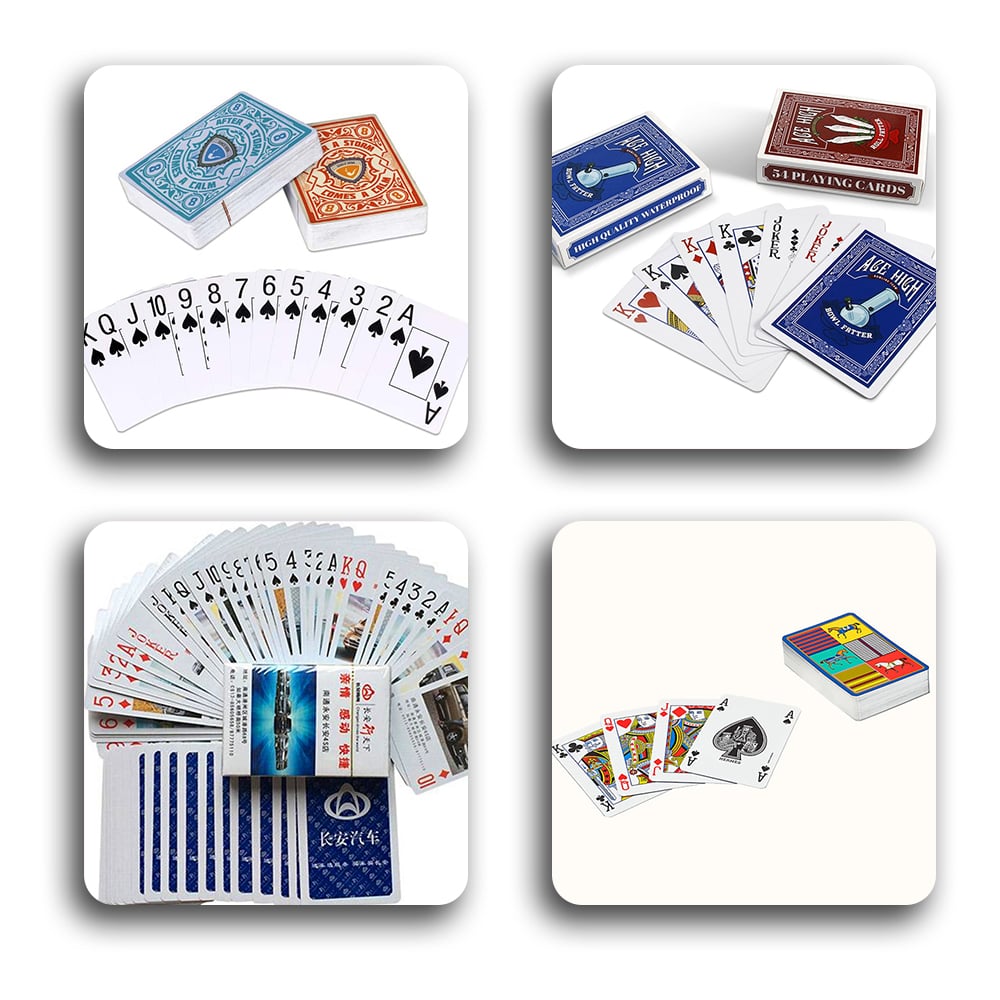
According to market data, the proportion of new materials used in card making is increasing at a rate of 15% to 20% per year due to the trend of personalization, customization, and environmental protection. This means that the printing industry and card makers still need a gambling die-cutting machine that can quickly and accurately cut various materials. Being able to make technical reserves in advance, master the process know-how, and solve the problem of extreme expansion of different materials is not only the key to providing customers with proofing and small batch production support, but also the main advantage that equipment manufacturers and users have in future market competition. By fully understanding the characteristics of the material and maximizing the performance of modern precision die-cutting equipment, the quality of card making and the limit of innovation will be further improved than ever before.
 EN
EN