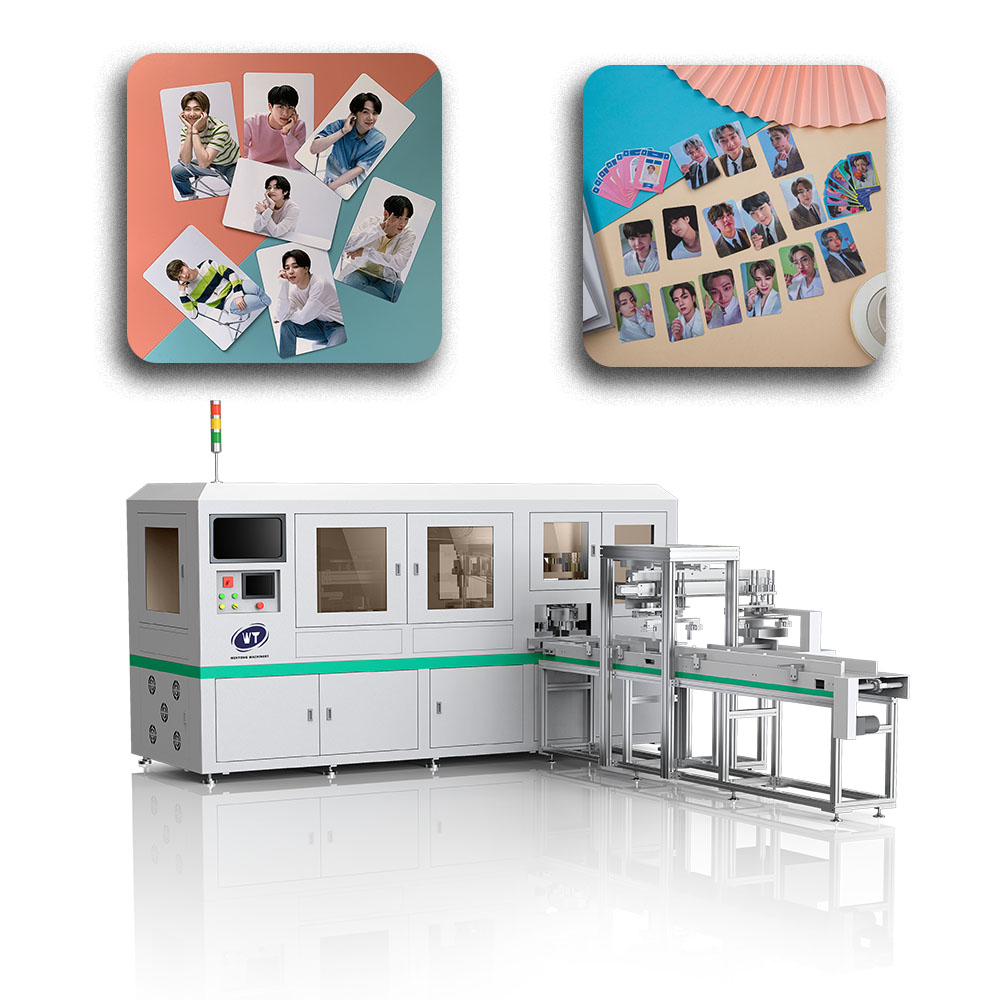
In the card production business, material costs typically account for 35% to 45% of total costs. Printing companies hope to improve the utilization rate of materials to reduce costs. The intelligent typesetting software that comes with the Star Card die-cutting machine adopts an AI algorithm and visual recognition technology, which solves the problems of the high waste rate of traditional typesetting materials and dependence on manual experience in the industry. This allows for more precise improvement of material utilization.
The software has a built-in database of card material properties. It can automatically change the typesetting spacing and layout logic according to the ductility and hardness of different materials such as paper, film, and soft magnetic sheets. For example, for very brittle soft magnetic sheet materials, the system will intelligently reserve a 0.2 mm buffer position to avoid material breakage and waste during the die-cutting process. For ordinary paper, the compact nesting algorithm is used to reduce the typesetting gap and maximize the material layout. Compared with traditional manual typesetting, the material utilization rate of intelligent typesetting software can be increased from about 82% to more than 95%. For example, a roll of 1000 mm×500 m PET film can produce about 1200 more card products.
The intelligent typesetting software is used in conjunction with the visual correction and positioning function of the star card die-cutting machine to form a closed loop of "typesetting-positioning-die-cutting." After the software typesetting scheme is completed, the equipment finds the positioning mark points on the material through the industrial camera. Then, the deviation between the actual position and the theoretical coordinates is calculated through the image processing algorithm. And the information is sent to the servo system in real time for adjustment. The linkage mechanism effectively avoids the typesetting misalignment caused by material stretching and incoming material deviation, further reduces the scrap rate, and is especially suitable for the production of products with complex patterns and high positioning accuracy requirements, such as star cards and animation cards.
The software also has a mixed order batch processing function, which can merge multiple small batch card orders into a set of layout schemes. By intelligently allocating the layout positions of different products, it helps to reduce the material waste when changing orders. The software can quickly make a small number of layout schemes to meet the needs of proofing. It can also cooperate with the equipment proofing function to make samples without wasting a lot of materials. In this way, customers can quickly confirm the samples.
The biggest problem with small-batch, multi-batch orders is that the mold change and machine adjustment time is too long. Traditional die-cutting machines usually take more than two hours to change the mold and debug parameters. This makes it difficult for the printing industry to meet the needs of a wide variety of products and fast delivery. The Star Card die-cutting machine uses a lightweight wooden die and a quick adjustment system, and its die-changing and adjustment efficiency is higher than that of any other machine in the industry. This has enabled the company to achieve its target of 50 orders per day.
The equipment adopts a customized wooden lightweight mold for mold design. These molds are more than 70% lighter than metal molds. Operators can complete the mold installation and removal without any lifting equipment. The standardized mold interface and positioning buckle make the mold replacement process simpler. There are three main steps: remove the old mold, put the new mold in place, and lock it in place. The whole process takes only two to three minutes, more than 90% faster than the 30-plus minutes it takes to change traditional metal molds. The wooden molds also cost only 15% to 20% of the cost of metal molds. This makes them cheaper for small orders, and they are particularly well suited to products that require a lot of customization, such as celebrity cards and game cards.
The technical optimization of the adjustment link makes the order change cycle shorter. The Star Card die-cutting machine has a memory module that can store more than 100 sets of die-cutting parameters for different orders. When switching orders, there is no need to change the core settings such as pressure and feeding speed. Just call the correct parameter group, and the automatic calibration function of the stepping precision feeding system will handle the rest. The entire mold change time is controlled within 15 minutes. The 7.5 kW servo stamping power system provides stable support for fast mold change. It can accurately output ±1 N of power and quickly calibrate the pressure, and there will be no problems such as stuck burrs and excessive indentation during the adjustment process.
Behind the increase in production capacity is the combination of the equipment's characteristics of "short, flat, and fast" and the flexible production capacity. From mold changing to machine adjustment to formal production, the preparation time for a single order is controlled within 20 minutes. The stable production capacity of 1,200 to 1,500 pieces per hour makes it easy to complete 50 small batch orders a day. This efficiency advantage allows printing companies to quickly meet the urgent order needs of foreign customers and improve order delivery rates and customer satisfaction.
Variable data printing technology is becoming more and more common in the production of bank cards, smart cards, personalized star cards, etc. However, the die-cutting alignment after printing has always been a major problem in the industry. Due to the overprinting error and material stretching deformation in variable data printing, the traditional die-cutting equipment relies on mechanical positioning, which is difficult to achieve micron-level precision control. This results in uneven die-cutting registration and a low pass rate of finished products. The star card die-cutting machine combines visual correction and stepping feeding technology to achieve a precise die-cutting solution.
The visual correction and positioning system is the key to ensuring the correctness of die cutting. The equipment has a dual-camera visual alignment module, which respectively shoots the platform benchmark mark and the material target mark. Then, the coordinates of the calibration points are quickly found through the WiseAlign visual algorithm, and the X, Y translation deviation and θ rotation deviation of the material are calculated and sent to the motion control system in real time for adjustment. Actual test data shows that the system can control the die-cutting positioning accuracy within ±0.03 mm and can accurately match the card pattern position after variable data printing. The system completely eliminates the possibility of die-cutting misalignment when printing errors occur.
The stepping precision feeding technology makes the die cutting more consistent. As the card products are small, the equipment adopts the segmented feeding mode. After each feeding is completed, the position is automatically corrected to avoid the accumulation of errors caused by continuous feeding. This feeding mode is most suitable for materials that are easy to stretch, such as film and soft magnetic sheets. It can effectively offset the deformation effect of materials in the transmission process and ensure the consistency of die-cutting position accuracy of each card. The stepping feeding system is carried out simultaneously with the nail-free and connection-free die-cutting process. This means that there is no need to reserve space for connection points, which not only improves the utilization rate of materials but also saves the process of tearing connection points and reduces the surface damage of finished products.
The die-cutting quality control and waste disposal technology constitute a closed-loop guarantee. The 7.5 kW servo stamping power system can change the stamping pressure according to the material thickness. The error is kept within ±0.02 mm, and different materials such as paper, film, and soft magnetic sheets can be die-cut without burrs. The machine has a built-in automatic waste removal device, which combines blowing and adsorption to remove the waste generated by die-cutting in real time. This can avoid the accumulation of waste and affect the die-cutting accuracy. For personalized cards after variable data printing, there are two ways to collect finished products that can be switched as needed: collecting in order to meet the needs of continuous numbering cards and collecting by category, which is more suitable for making multi-pattern mixed orders, which speeds up the sorting speed.
The Star Card die-cutting machine is very suitable for making small batches of card products and small packaging boxes because of its characteristics of being "short, flat, and fast." It has eight technical advantages, which are better than other products: First, the layout visual correction positioning, with positioning accuracy of up to ± 0.03 mm, solves the variable data printing after the die-cutting problem. Second, the stepping precision feeding—each step automatically corrects the position, making up for the material deformation or feeding error. Third, the die-cutting process without nails or connections results in a higher material utilization rate and a more beautiful appearance of the finished product. Fourth, the intelligent typesetting software and rapid adjustment system, coupled with the efficient proofing capability, can complete the sample production and confirmation in 30 minutes. Fifth, it can be quickly adjusted in 15 minutes, and the mold can be changed in 2-3 minutes so that 50 orders can be switched in one day. Sixth, it can process a variety of materials, including paper, film, soft magnetic sheets, and other production materials; seventh, the finished product has high precision and good quality, and the edge of the card has no burrs, which meets the needs of high-end products such as bank cards and smart cards; eighth, the back-end linkage ability is strong, and it can be connected with the back-end packaging system to provide a complete solution of "die-cutting-card receiving-packaging."
The equipment is suitable for making various cards, such as star cards, animation cards, game cards, playing cards, business cards, bank cards, smart cards, etc. It can also be used to cut small packaging boxes. For overseas printing industry customers, the equipment has an interface design that meets international standards. This means that it can be easily connected to the most common printing presses and packaging production lines in Europe and the United States to meet the needs of the global market. The Shenzhen production base has standardized manufacturing processes to ensure that the equipment meets the strict requirements of overseas customers for stability and precise control. It has cooperated with printing companies in more than 20 countries and regions around the world.
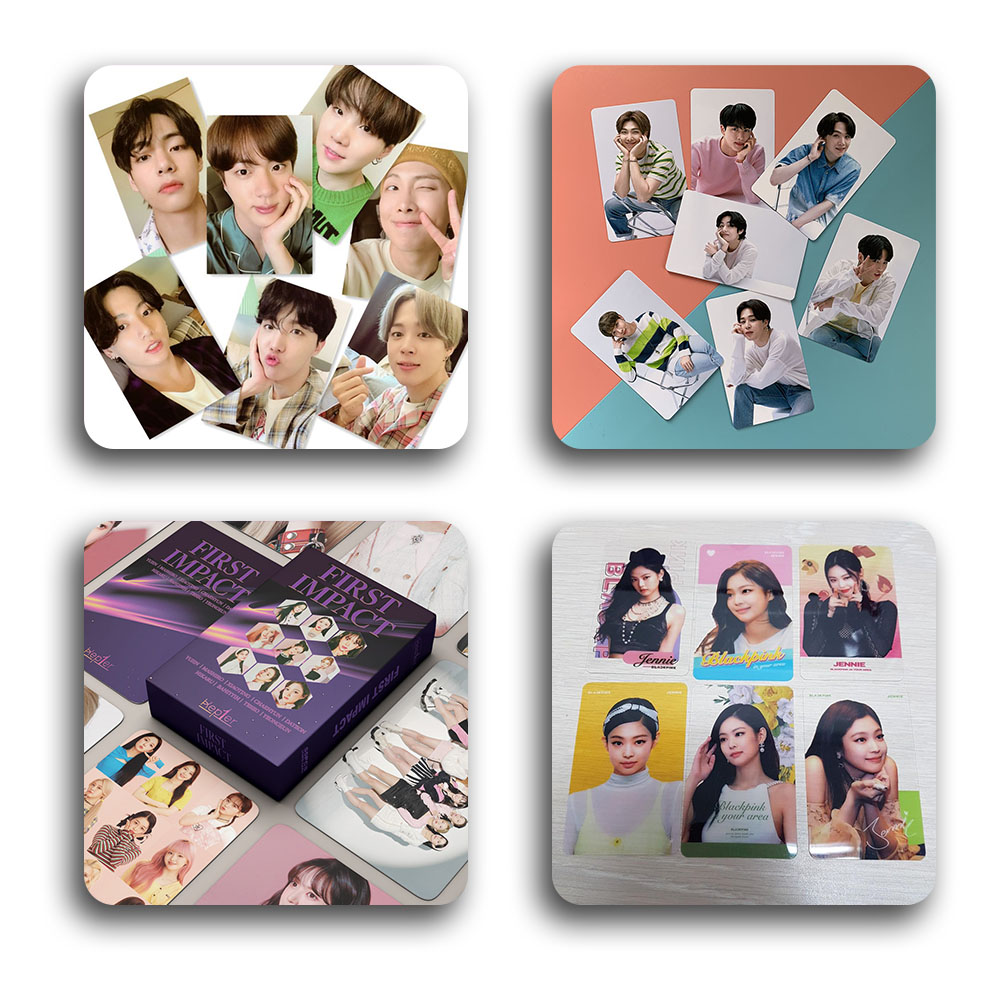
The Star Card die-cutting machine has created a flexible production system that can cope with large and small batch production. It is realized by adopting three core technologies: intelligent typesetting, rapid mold change, and precise die-cutting. It provides efficient, accurate, and low-cost solutions for the printing industry. Data shows that the equipment can increase the material utilization rate from the traditional 82% to more than 95%, produce 1200 more card products per roll of material, and reduce the material waste cost by 15%-20%; the mold change and machine adjustment efficiency is more than 80% higher than that of traditional equipment, the daily production capacity is increased to 50 orders, and the delivery cycle is shortened by 40%; the die-cutting yield is stable at more than 99.5%, which greatly reduces the rework cost and waste loss.
The Star Card die-cutting machine is suitable for a variety of different types of printing, responds quickly, and produces high-quality finished products, making it a good choice for overseas printing companies. This is because the industry is moving toward more customized orders and shorter delivery times. Its integrated solution that can be linked with back-end packaging makes the production process more automated and reduces labor costs. With the popularization of variable data printing technology and the growth of personalized small-batch customization needs, the wide product adaptability of the Star Card die-cutting machine will become the most important equipment for printing companies to enhance their core competitiveness. It will also provide technical support for the global card production industry to improve efficiency and quality.
 EN
EN