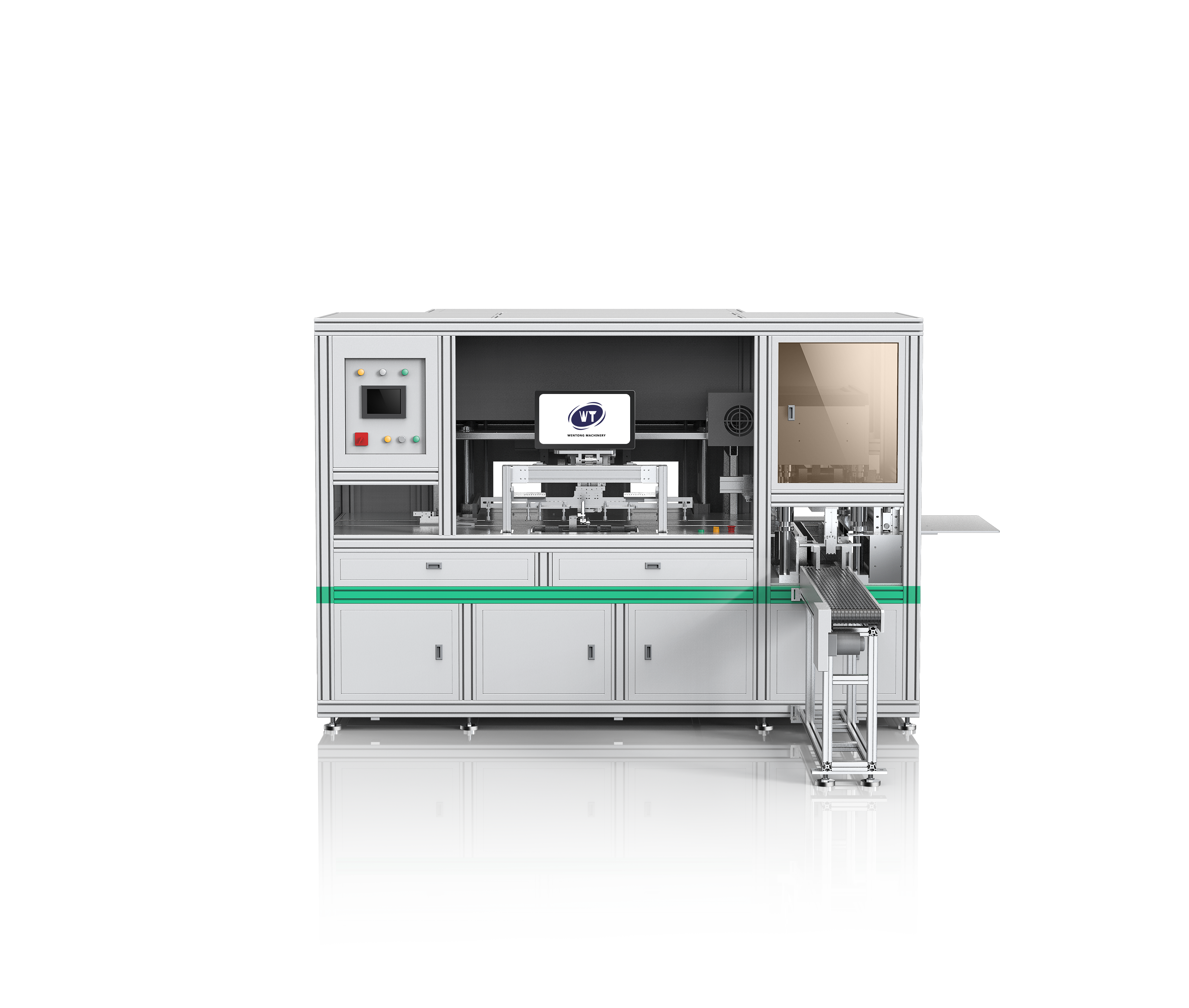
The trading card die-cutting machine is the most important part of the poker production chain in the printing industry because it ensures the occurrence of production and the high quality of poker. It is often used for the precise cutting of products such as smart cards, game cards, playing cards, animation cards, and bank cards. Because it can accurately feed, automatically collect, and automatically discharge waste, it has become an important part of large-scale production. The trading card die-cutting machine comes from Shenzhen, China, and serves the global printing industry with mature technology. It has ten major features, including unique texture presentation, super durability, and a variety of different ways of use. It can punch and cut book paper and filter paper and has a wide range of uses. It adopts hot stamping technology and automatic classification and sorting and can collect finished products in a specific order or classification. It adopts a 7.5 kW automatic servo system, which is accurate in punching and cutting, and the products have no burrs. This is an integrated customized solution. For printing companies around the world, the best way to reduce costs, improve production efficiency, and maintain competitiveness is to scientifically improve the efficiency of poker card die-cutting machines and ensure quality. This article discusses the efficiency optimization techniques from five aspects: mold maintenance, material adaptation, debugging parameters, layout production line, and rapid mold change. And give some useful suggestions to practitioners.
The die-cutting knife is the most important part of the die-cutting machine for trading cards. Its condition directly affects the precision, output, and efficiency of die cutting. Printing companies often encounter problems such as burrs and dimensional deviations due to mold wear and bending, which increases rework costs and reduces the effective running time of the equipment. The main parts of the body of the trading card die-cutting machine are made of materials that are not easy to wear and have a long service life. The life of the die can be extended by more than 30% through scientific full-cycle maintenance and a standardized replacement process. At the same time, it can maintain the stable efficiency of the equipment and ensure the unique texture and precise size of the product.
The cleaning, inspection, and storage of the die-cutting plate are the most important parts of its daily maintenance. After production, the waste and dirt on the surface of the die-cutting plate should be removed in time; especially after processing plastic cards with strong viscosity, it should be thoroughly cleaned with a special cleaning agent. Before starting the machine, the focus should be on checking whether the blade has notches and curling and checking the flatness of the die-cutting plate. Local wear can be repaired by grinding, and wear exceeding 0.2 mm should be replaced. The die-cutting plate that is not commonly used should be vertically suspended in a dry and ventilated place to avoid collision and deformation.
The length of time a production line is down is directly related to the speed of die changes. The trading card die cutter comes with a lightweight wooden die that reduces changeover time from 2-3 minutes to 1 minute. Compared with the old metal dies, the die-changing efficiency is increased by 80%. The standard die-cutting process should follow the three-step method of "cleaning-positioning-debugging": First, clean the die-cutting machine base to ensure that the work surface is free of debris and the flatness of the mold installation is ensured; then, use a right-angle ruler to correct the verticality of the mold and the upper plate of the die-cutting machine, and install it in the center according to the feeding direction to avoid die-cutting deviation; finally, lay the die-cutting material for trial pressing, detect the uniformity of the indentation through the carbon paper, and fine-tune the place where the indentation is too deep to ensure the uniformity of the die-cutting pressure. In addition, printing companies should also establish a die-cutting plate usage record, recording the usage time of each die-cutting plate, the type of processed products, the maintenance status, etc. This will help them better manage the molds.
The trading card die-cutting machine has great features that allow it to be used for many different things. It can adapt to the trading card materials, such as paper and plastic, and can also take into account the punching of books and filter paper, making the equipment more widely used. The speed and precision of die-cutting are directly affected by the physical properties of different materials, such as thickness, hardness, and toughness. The main goal of material adaptability optimization is to find the best die-cutting settings to speed up production and increase capacity while maintaining the unique texture of the product and avoiding burrs.
For paper materials such as playing cards and cartoon cards, the thickness is generally between 0.2 and 0.5 mm, and the toughness is low. The machine can be run faster during die-cutting. For example, a poker die-cutting machine can die-cut 80 g coated paper at a speed of 180 to 200 times per minute. At this time, the precise feeding function of the 7.5 kW servo system is required to prevent the paper from being stretched and deformed. When thick cardboard (thickness > 0.5 mm) is used, the speed should be reduced to 120-150 times/min, and the die-cutting pressure should be increased to ensure that the knife line is completely cut through without leaving burrs.
Plastic cards, such as PVC, are strong and hard. When die-cutting, it is necessary to find a balance point between speed and strength. If the speed is too fast, the blade will wear out quickly and burrs will easily occur. The trading card die-cutting machine can punch accurately without burrs. When cutting PVC cards, the special plastic die-cutting mold can control the speed at 100-130 times/minute, make high-quality cuts, and give the cutting surface a unique texture. When cutting high-strength plastics such as PET, the speed needs to be reduced to 80-100 times/minute, and the pressure sensing system can change the strength in real time so that the material will not bend.
The best way to adapt to materials is to establish a parameter database to record the best die-cutting speed, pressure, and feed spacing for each material and each thickness. New orders can directly call the parameters, reducing the loss of trial cutting. A printing company has reduced the trial cutting loss rate from 5% to 1.2% and increased the daily capacity of a single production line by 20% by establishing a material parameter database. In addition, optimizing the raw material procurement process and cooperating with suppliers to change the width of the material can avoid cutting standard wide-width materials and improve the material utilization rate.
The trading card die-cutting machine adopts a 7.5 kW servo system and works automatically. This system is the main reason why the machine can cut quickly and accurately, and it also reflects the advanced nature of its technology. The main goal of the program parameter debugging is to find the best settings for parameters such as speed, pressure, and feed in different situations so that the product has a unique texture and no burrs while achieving "high speed without losing accuracy and accuracy without losing efficiency."
The speed and accuracy balance debugging is based on the idea of "segmental adjustment and dynamic matching." First, make sure the feeding settings are correct. Set the pulling length according to the product size to ensure the product spacing and die-cutting knife distance are correct to avoid waste and misalignment. Cards with more straight edges, such as bank cards, can run at full speed. However, for products with rounded corners and holes, such as game cards, the speed is reduced to 70% of the rated value when the curvature changes suddenly and to 50% in the hole area so as to correct the oblique mouth defect.
The die-cutting pressure setting needs to be adjusted according to the material thickness. The empirical formula is pressure (N) = material thickness (mm) × material hardness coefficient × die-cutting knife perimeter (mm). For example, if you want to cut a 0.3 mm thick PVC card (hardness coefficient 12) with a die-cutting knife with a circumference of 200 mm, you need a pressure of about 720 N. During debugging, the cutting quality can be checked by test pressure. If the slag is more than 0.5 mm, it means that the pressure is not enough and needs to be increased by 5% to 8%. If the indentation of the incision is too deep, it indicates that the pressure is too high and needs to be reduced by 3% to 5%. The equipment also uses servo feedback to monitor pressure changes during die-cutting in real time. The change is controlled within ±5%, which ensures the stability of die cutting.
The program storage function of the transaction card die-cutting machine can save the parameter combination (speed, pressure, feeding, receiving method, etc.) of different products. When switching products, the parameters can be directly called, reducing the debugging time. A printing company has reduced the product switching time from 30 minutes to 5 minutes by optimizing parameters and storing programs. The efficiency of mass production has increased by 35%. In addition, the equipment can adopt the pre-compensation function of thermal deformation for transaction cards (such as smart cards) with high precision requirements. During the programming stage, the reverse shrinkage compensation amount (0.1 mm for every 10 mm of plate thickness) can be added to compensate for the shrinkage caused by heat accumulation.
Printing, hot stamping, die cutting, card collecting, sorting, etc. are all steps in the production process of transaction cards. The scientific layout of the production line directly affects the smoothness of circulation. The trading card die-cutting machine works well with the hot stamping process and can be easily added to the "printing-hot stamping-die-cutting" process. Its integrated customized overall solution advantage, through optimized layout, realizes seamless connection with the front and rear processes, reduces material handling time, eliminates production bottlenecks, and improves the overall production capacity of the production line. The main idea of layout optimization is "process-oriented, one-way flow." That is, the equipment and work sites are arranged in a straight line or U-shape according to the process sequence. This prevents cross-flow and backflow and reduces the distance of goods transportation. The U-shaped layout is ideal for small and medium-sized products with a wide variety of types. It reduces the distance employees have to move and makes it easier for processes to work together. An electronics factory improved its overall efficiency by more than 30% after switching to a U-shaped production line.
To make the connection between the front and back processes better, the focus should be on solving the problems of material movement and information synchronization. In terms of material handling, the customized feeding device can automatically send the printed semi-finished products into the die-cutting machine. This avoids material damage or misalignment caused by manual handling. After die-cutting, the finished products can be directly sent to the next quality inspection or packaging process through the automatic sorting system of the equipment. The intermediate transfer link is reduced. In order to realize information synchronization, the online control function of the equipment is turned on so that the die-cutting machine and the equipment of the front and rear processes can send signals to each other. If a problem occurs in a certain process, the system will automatically shut down and issue a warning. This avoids the production of a batch of defective products.
Reasonable use of space and a flexible layout are also important factors in improving connection efficiency. There are two ways to collect the finished products of the trading card die-cutting machine: in order and by category. There is a collecting device at the output end of the machine, and the batch of standardized products are collected in order to ensure that the finished products are arranged neatly. When producing multiple varieties of products in a mixed flow, the products are collected by category, and the sensors identify the product type and automatically sort them into different material boxes. At the same time, the modular equipment layout is adopted, equipped with a movable tooling table and a universal interface. When product demand or processes change, the production line can be quickly reorganized, and the downtime adjustment time is kept to a minimum. One printing company optimized its production line layout, reducing the waiting time between the die-cutting process and the preceding and following processes from two hours to half an hour per day. The overall production capacity of the production line has also increased by 28%.
Changeover time directly affects the production capacity of the trading card die cutter when producing a variety of different types of cards in small batches. The die is made of wood, which is light in weight and easy to move and position. Changing the mold only takes 2-3 minutes, which is more than 80% faster than the traditional metal mold (15-20 minutes). This is the main benefit of being able to manufacture many different types of products.
To use lightweight wood forms effectively, the process of changing forms and preparing tools must be standardized. Have the right tools ready, store the molds in categories, and make clear marks to avoid wasting time looking for them. Before changing the mold, clean the workbench first. After removing the old mold, the new mold can be installed quickly and accurately by using the pre-positioning groove of the wooden mold, without re-correction.
After changing the mold, the "quick stamping method" can be used for debugging and improvement. For this purpose, two layers of adjusting paper can be overlapped for a single-pressure test. Check the carbon paper to see if the imprint is uniform. If you find any light areas, you can use single-sided tape to raise them (no more than 1-2 layers), saving too much time on the repair version. For the die-cutting plate of commonly used products, the installation positioning line can be marked on the die-cutting machine. When changing the die-cutting plate, you can directly align the positioning line, and the debugging time is shorter. One printing company increased the average number of die changes per machine per day from 5 to 12 and the capacity utilization rate for multi-variety production from 60% to 85% by adopting a standardized die change process and wooden dies.
The daily maintenance of wooden light molds is also very important to avoid damage and affect the mold changing speed. After changing the plate, the dust and waste on the plate should be cleaned up, and the wooden base plate should be checked for cracks and bends, and the blade should be checked for looseness. To maintain the accuracy of the die-cutting mold, do not store it in a humid place to prevent the wooden base plate from being deformed by moisture. In addition, do not let it hit hard objects. If properly maintained, the lightweight wooden formwork can be used more than 50,000 times, which is the same as the service life of the traditional metal formwork.
By maintaining and replacing the die-cutting knife, optimizing material adaptability, debugging program parameters, laying out the production line, and quickly changing the mold, printing enterprises can comprehensively improve the efficiency of the die-cutting machine for transaction cards and ensure the product quality is consistent. Combining industry practice data and equipment characteristics, efficiency optimization can greatly improve production value:
1. Increase production capacity: The average daily production capacity of a single transaction card die-cutting machine can be increased by 30% to 35% through rapid mold change (mold change time is shortened by 80%), parameter optimization (product switching time is shortened by 70%), and production line layout optimization (connection waiting time is shortened by 75%). If the machine works for eight hours a day, the average daily output can be increased from 15,000-20,000 to 20,750.
2. Cost saving: the service life of die-cutting tools is increased by 30%, and the procurement cost is reduced by 25%. The optimization of material adaptability and parameter debugging also reduced the trial cutting loss rate from 5% to 1.2%. The daily consumption of materials is 1,000 kg, and the daily saving of materials is 38 kg. The time for mold changing and debugging is shortened, and the labor cost is reduced by 15% to 20%.
3. Quality improvement: Through careful debugging of parameters and maintenance of molds, the product yield rate has been increased from 95% to over 99.5%, and the burr defect rate has been controlled below 0.3%. The product meets the high-quality standards of transaction cards in the global overseas market.

For the poker card die-cutting machine to work better, the characteristics of the equipment, process parameters, production layout, etc. need to be coordinated with each other. Printing companies need to combine their own products and formats and use the above methods in a targeted manner. Give full play to the core advantages of the equipment, such as multi-application, automatic servo, data acquisition, etc., in a way that suits you. This will bring a double improvement in quality and efficiency. Shenzhen's poker card die-cutting machine technology is mature, with a wide range of functions, and is a good choice for the global printing industry. In the future, the industry's demand for personalization and high precision will make its optimization space larger. To maintain competitiveness, companies need to learn how to use scientific optimization methods.
 EN
EN