The conversion process from printed boards to finished products is the most important determinant of the final product quality for smart cards, game cards, and high-end printing and packaging. The core equipment for achieving this goal is the PVC card punching machine (also known as a punch press, die-cutting machine, etc.). It is an important machine for producing various card types, such as cards, smart cards, business cards, game cards, playing cards, anime cards, bank cards, star cards, etc. For modern printing companies that focus on "short, flat, and fast" small batch orders, understanding the working principles of machines and the logic of precision control systems is the foundation for improving production efficiency and product competitiveness.
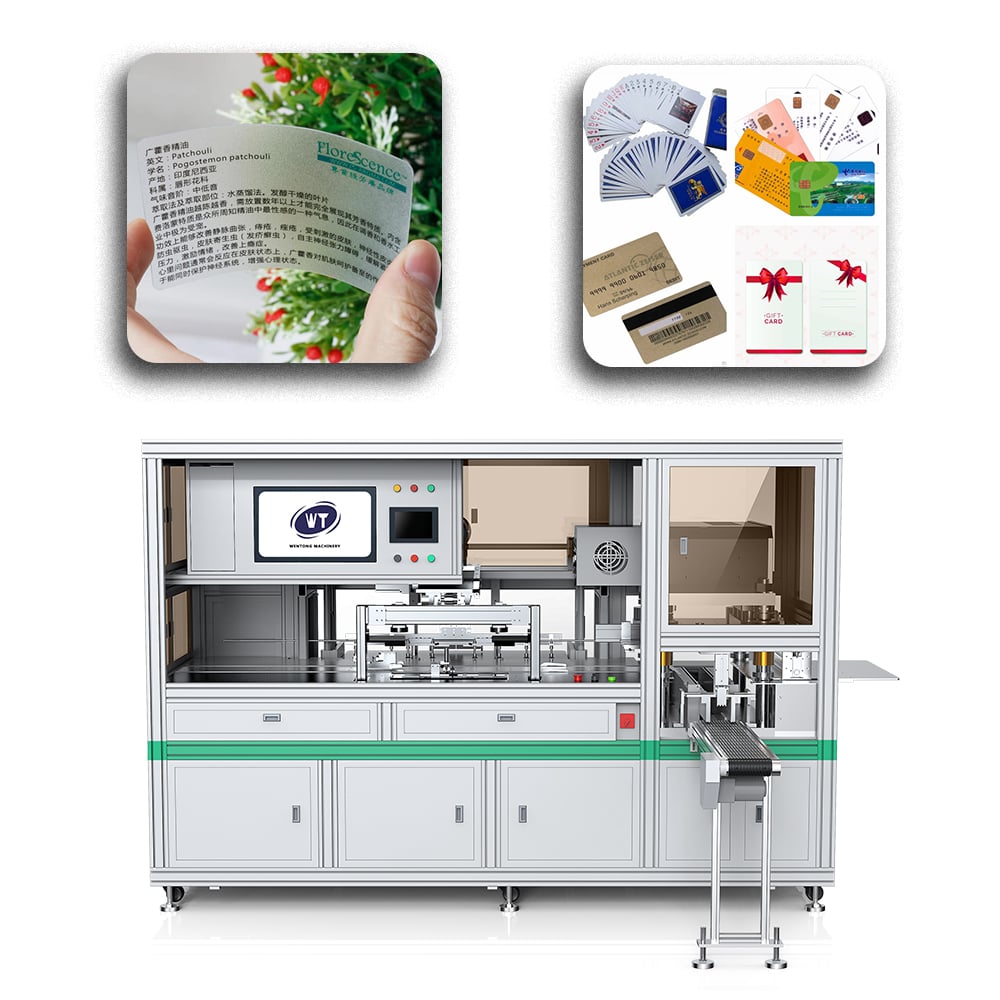
Smart cards are not just plastic cards. They can have RF chips, magnetic stripes, or very precise printed patterns. That's why PVC card punching machines require very precise cutting. The punching accuracy directly affects whether the card complies with the ISO7810 international standard (bank cards and ID cards should be 85.6 mm × 53.98 mm) and whether it can pass through the card reader smoothly during packaging (such as chip bonding) or the issuance process. If the accuracy is not good enough, the scrap rate will quickly increase. This is especially true for high value-added game cards and star cards, as the quality of the edges directly affects the customer's experience when opening the box and their perception of the brand.
Positioning accuracy is one of the two main ways to measure accuracy. It is the degree to which the perforated pattern matches the geometric center of the card. If holes are punched and cut on beautifully printed anime cards, the character's eyes will deviate from the center, or the border width will be uneven, and the entire batch of cards must be discarded. Thanks to the visual system, modern high-precision equipment can maintain its positioning error within ± 0.05 mm and ± 0.10 mm, which is the same width as hair. The second thing is edge quality, which is one of the most important factors for Indian customers when purchasing tools. The cutting edge should not have any burrs or white edges. If there are burrs on the edges, it will not only change the tactile sensation of the card but also cause coated products such as bank cards to peel off over time. This may lead to serious quality issues.
After the lamination or printing process, the PVC card punching machine is an important component of the post-forming processing. A regular smart card production line will automatically mix raw materials, extrude or cast them into sheets, print patterns, laminate, stamp, form, inspect quality, and package them. The final step in the physical forming process of manufacturing the final product is stamping, which transforms large pieces of material into the final product.
The upstream equipment is a printing laminating machine, and the downstream is a quality inspection packaging line. Its core function is defined as "connecting the past and the future": that is to say, it receives PVC, PETG, paper or composite material boards that have been printed and/or laminated into large boards, and through a series of precision die-cutting actions, decomposes the large board materials into individual cards of the correct size, and then automatically delivers them to the following process. The efficiency of this process is the main factor determining the overall output rate of the process.
Indian customers often order "many different types of small batches", such as customized star cards, anime cards, and religious themed cards. This means that the equipment needs to be very flexible. A machine that can quickly replace molds and feed one material at a time. This makes it easy to switch between "game card orders" and "bank card orders" on the production line. PVC card punching machine is usually the most important part of the production line. The ability of printing factories to quickly change orders and the time required to adjust machines directly affect their profits and response speed to market changes. With a good PVC punching machine, companies can accept small but high profit customized orders without worrying about the cost of changing orders.
In real life, there is a balance between cutting speed, dimensional accuracy, and the speed at which the finished product passes inspection. If you only want to walk fast, you may lose accuracy and get more waste. But if you demand too much accuracy, your output may lose efficiency. Many new technologies have helped modern PVC card punching machines solve this balance problem.
The first step is to use technology for layout visual correction and positioning. Traditional punch in machines use mechanical barriers or cursor positioning. If there are printing errors or uneven cutting of material edges, it will cause a lot of waste. Your device has a visual correction system that gives it a 'smart eye'. Before the printed material enters the stamping station, a high-resolution CCD camera will capture certain cross marks on it. Industrial computers can determine the distance between the actual position and the standard position in real time. Then, it moves the feed mechanism through a UVW platform or servo motor, allowing it to make real-time changes with precision down to the micrometer level. This technology ensures that the punching position of each card remains correct and error free.
The next step is to use progressive techniques. The step-by-step feeding mode is very important for "short orders" and "sampling". This is different from traditional punching machines that use continuous long-distance feeding. The machine can move forward one step at a time, gradually feeding based on the set card spacing. This mode not only reduces the total feed error caused by mechanical inertia, but also means that die cut products do not require "nail holes" or "connection points" as before. When you handcraft something, you usually need to leave some connection points on the card so that it won't scatter after punching. You can manually open these points later, which will create burrs and increase labor costs. Our equipment design completely solves this problem. The mold structure is simpler and the production cycle is shorter, making it very suitable for small batches and fast samples.
The third thing is to ensure that the power configuration and materials can work together. 7.5KW high-power servo motor provides cutting power. When stamping thick materials such as PVC sheets or composite card substrates with a thickness exceeding 0.8mm, servo motors can provide you with sufficient torque and stable bottom dead center pressure. They also allow you to precisely control the cutting depth when stamping thin paper, such as playing card paper. This prevents "continuous stamping" or "excessive stamping causing indentation". Due to this power characteristic, regardless of the material, such as paper, film, soft magnetic film, or other materials, the edges of the card can be flat, smooth, and free of burrs. Indians often use special textured paper to make popular religious cards there. Through this precise power control, you can maintain the texture of the paper without crushing it.
There are two ways for equipment to collect finished products according to production needs. Sequential collection is suitable for large-scale continuous production, where cards are neatly stacked in the order of their release. You can directly connect it to the backend packaging equipment to create a complete solution from stamping to packaging. Classification collection (multi tray collection) is more suitable for handling mixed splicing orders with "one version and multiple patterns". This device can automatically classify cards with different patterns into different trays according to a preset program. This means that there will be no need for manual sorting in the future, which completely solves the problem of messy collection and saves 2-3 sorting workers. By adopting servo control and visual positioning, the fully automatic PVC card punching machine can achieve a stable product qualification rate of over 99.8%. This means that only 2 out of every 1000 cards are junk. This helps customers save a lot of money on materials and costs.
When the machine is used for a long time, even the best machine can sometimes have production problems. As a foreign trade merchant selling goods around the world, teaching customers how to systematically solve problems is a good way to gain their trust and professionalism. Here are the four most common problems in the smart card industry and how to solve them.
This usually looks like a pile of cards with patterns clearly leaning towards one side. Reason analysis: This is usually not due to machine wear and tear; This is usually due to something blocking the trigger signal of the visual positioning system, or material slipping during the feeding process. Another common reason is that the material shrinks in the final step (printing or lamination), causing its size to be unstable. This is especially true during the summer in India, when the temperature and humidity can cause the size of PVC materials to change by 0.1% to 0.3%. Firstly, check if the CCD camera lens and light source are clean and dust-free. Regularly clean optical components. Secondly, check whether the positioning edge of the material is firmly fixed on the feeding guide rail and whether the pressure wheel has applied an appropriate amount of lateral pressure. Finally, use the device's step-by-step feeding function and HMI human-machine interface to change the feeding compensation settings for each step. This will help compensate for the thermal shrinkage effect of the material.
Customers often encounter quality issues. Reason: PVC is naturally a bit fragile. When the cutting edge of the mold becomes dull or the stamping speed does not match the hardness of the material, shear stress concentration occurs. This results in white or small burrs on the stamping edge. The difference in hardness between the film layer and the substrate can also exacerbate the problem of laminated cards. Solution: Your device has a 7.5 kW servo power that allows the operator to set the cutting speed curve on the touch screen based on the thickness and hardness of the material. When dealing with thicker PVC or hard materials, reducing the stamping speed and increasing the bottom dead center dwell time by 0.1 to 0.3 seconds can help remove burrs and whiten the material by giving sufficient cutting time. If you use lightweight wooden molds, you can also replace the molds within 2-3 minutes. When you change the order material from PVC to paper or soft magnetic sheets, you should change the precision mold to the correct gap parameters. You should also follow the rule of "one material, one set of molds" and not attempt to use the same set of molds for all materials.
Reason analysis: The main reason is that the garbage cleaning is not smooth or the card collection structure is unreasonable. When the card leaves the conveyor belt and falls into the ink cartridge, it will flip or tilt. Airflow issues can also change where the light truck lands, especially during rapid production. Your device has two ways to collect finished products, which can help you in different ways. You can change the speed of the conveyor belt and the rhythm of punching in sequential collection mode to ensure that the cards enter the card slot smoothly. The multi-box structure and adjustable buffer baffle work together in the classification collection mode to slow down card dropping. If your cards are thin, such as playing cards, you should place ion air sticks in the receiving area. This will eliminate static electricity and prevent uneven stacking of cards due to electrostatic adsorption.
Reason: When replacing molds in traditional card punching machines, it is necessary to recheck the parallelism of the upper and lower molds, change the punching gap, and fix the feeding position. Skilled technicians also need 1-2 hours, which is a major issue for the efficiency of small-batch and multi-variety production modes. Due to the demand for "short, flat, and fast" orders in the Indian market, the quick-locking structure and lightweight mold design of your equipment can shorten the time for mold replacement to 2-3 minutes. You don't need any tools to load or unload the mold, as it has a positioning pin and a magnetic attraction structure. The automatic search function of the visual system makes it easy to switch and change orders in just 15 minutes. This includes replacing molds, placing orders, and confirming the first product. This means that customers can confidently order limited edition game cards or customized star cards, but they must order at least 50 or 100 boxes. They don't have to worry about the cost of changing orders cutting profits, which means the production mode is really "short, flat, and fast."
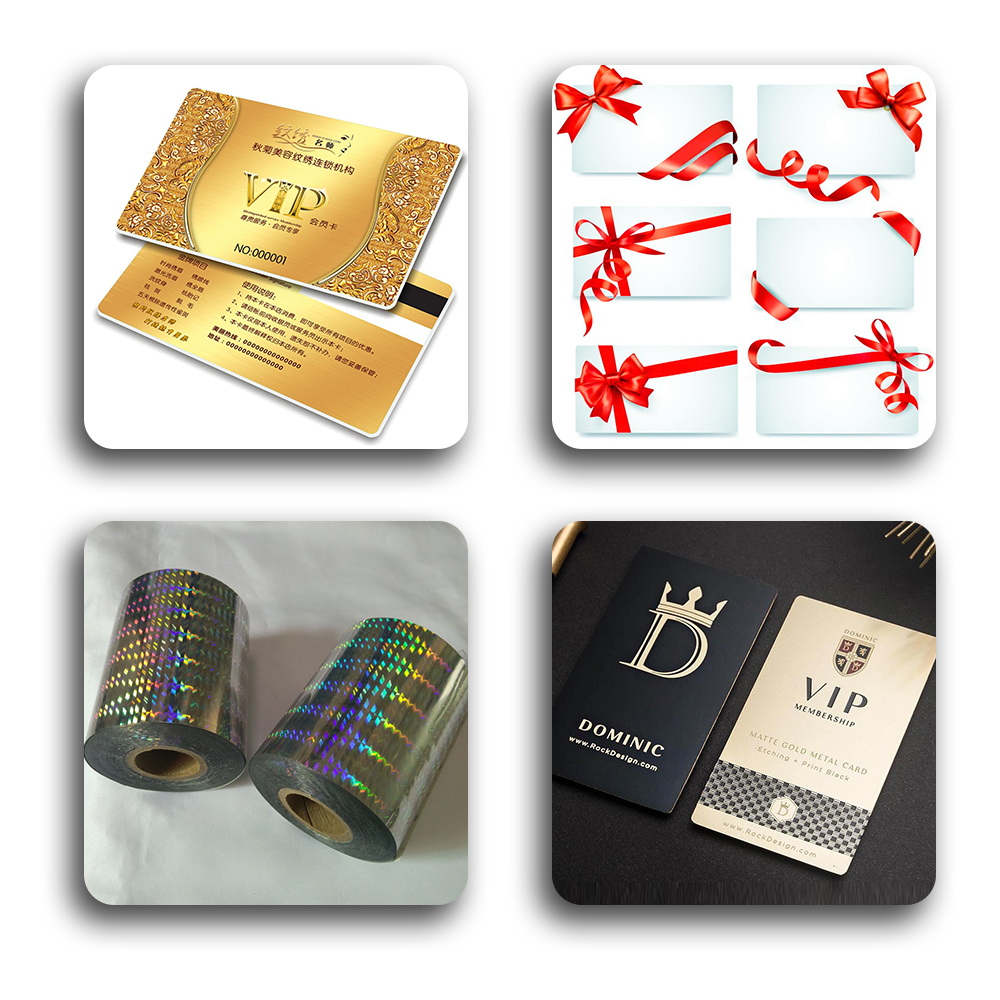
PVC card punching machines are now not just tools for cutting and forming; they are intelligent production terminals that can produce accurate images, control servo systems very precisely, and change their manufacturing methods. In rapidly growing printing markets such as India that are open to the world, digital transformation and consumer upgrades are happening, and manufacturers' understanding of their equipment directly affects their competitiveness in the market.
In terms of technological progress, choosing equipment with visual positioning, step-by-step feeding, rapid mold change, and dual-mode card receiving functions directly affects the response speed and profitability of printing companies in the market of "small batch, multiple varieties, and short delivery time." Your device's "short, flat, fast" technology roadmap is very suitable for the current global trend of reducing inventory and allowing customization in card production.
Data is the best proof: equipment using servo drive and visual positioning technology can control cutting accuracy within ± 0.05 mm, which is more than five times higher than traditional mechanical positioning accuracy. The yield rate remains above 99.8%, which means that for every one million pieces produced, thousands of pieces of material waste can be reduced. Using traditional devices to change orders used to take 1 to 2 hours, but now it only takes 15 minutes. Replacing the mold takes 2 to 3 minutes. This provides printing companies with the technical assistance needed to handle profitable short-version orders. If there are eight order changes per day, it can save nearly eight hours of non-manufacturing time. This is like adding another capacity transfer.
This is not only a small technological advancement but also a big step for printing companies to shift from the "mass production" model that emphasizes economies of scale to the "flexible intelligent manufacturing" model that focuses on customer needs. Whether you are making PVC smart cards that comply with ISO standards, high-value collectible game cards, star cards, or lightweight game cards and shaped packaging boxes, understanding the working principle of the equipment and how to precisely control it will give you a huge advantage in the global market. This machine can process many different types of materials, such as paper, film, and soft magnetic film. It can also produce things with high precision and good edges. This makes it a good choice for professional manufacturing of products in Shenzhen, China, and serving customers around the world.
 EN
EN